Drainage systems are easy to overlook when water appears to be flowing normally. However, commercial drains and catch basins collect material every day, long before a complete blockage becomes visible.
Parking garages, loading areas, commercial yards, sidewalks and other paved surfaces can direct sand, silt, litter, leaves, oil residue and winter salt toward nearby drains. Some of this material settles inside the catch basin. Finer debris may continue into the connected drainage line, where it can gradually restrict water flow.
Regular drain vacuuming removes accumulated water and loose material from accessible basins. When buildup extends into the drainage line, high-pressure flushing or hydro jetting may also be needed. The purpose is to maintain drainage capacity and address developing problems before they cause a major interruption.
Where Commercial Drain Buildup Commonly Occurs
Royal Wash focuses on drainage systems serving commercial, industrial and multi-unit properties rather than household sink and bathtub clogs.
Drain vacuuming and cleaning may be required around:
- Underground parking garages
- Commercial surface parking lots
- Loading docks and receiving areas
- Warehouses and industrial buildings
- Commercial yards
- Ramps and building entrances
- Waste and recycling areas
- Floor drains and trench drains
- Exterior catch basins
- Multi-unit residential properties
Each location receives a different combination of water and debris. A parking garage drain may collect road salt, sand and vehicle residue, while a loading area may receive dirt, packaging debris and material carried in by delivery traffic.
That difference matters because the cleaning method should reflect the site, the drainage system and the material being removed.
What Collects Inside Commercial Drains?
Catch basins and floor drains are designed to receive water, but water is rarely the only thing entering them.
Sand, Silt and Grit
Vehicles and foot traffic carry sand and fine grit into parking facilities. During cleaning or wet weather, that material moves toward the drains. Heavier particles then settle at the bottom of the basin instead of washing away.
Winter Salt and Slush Residue
Toronto winters introduce road salt, sand and dirty snowmelt into parking garages and building entrances. When the snow melts, the water drains away while some of the solid material remains.
Leaves and Outdoor Debris
Exterior catch basins can collect leaves, soil, twigs, litter and landscaping debris. Material covering the grate may restrict water entry, while smaller particles can settle inside the basin or move farther into the line.
Oil and Vehicle Residue
Parking areas and loading zones may develop oil spots and other vehicle-related residue. Cleaning the pavement without considering the drainage system can move loosened material toward the nearest drain.
Sediment From Property Cleaning
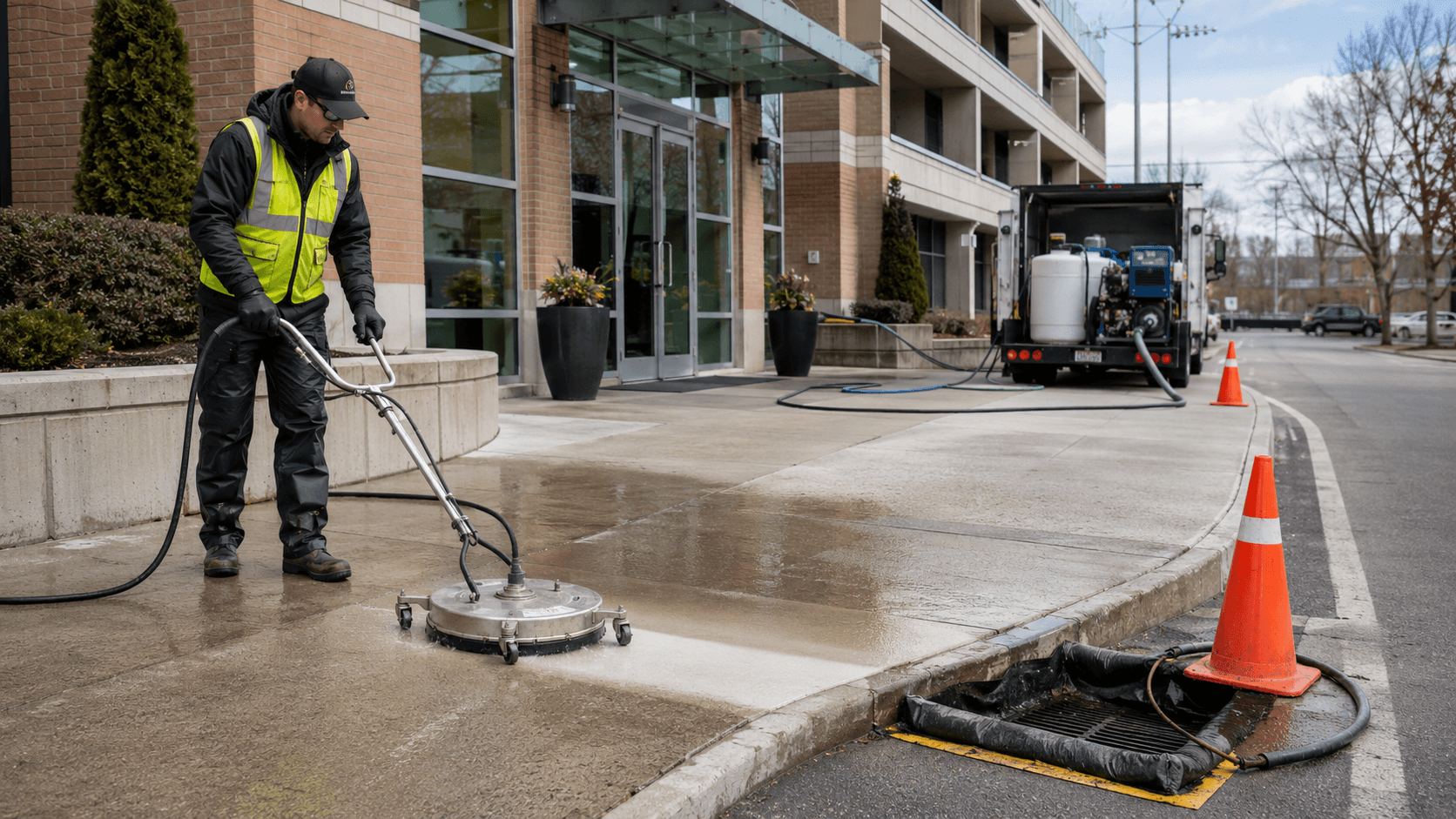
Pressure washing a garage or commercial pavement can release substantial amounts of dirt. The work area and drains need to be managed so that accumulated debris is collected instead of simply being pushed farther into the drainage system.
This is one reason parking garage cleaning and drain maintenance should be planned together.
Why Catch Basins Do Not Clean Themselves
A catch basin is designed partly to allow heavier material to settle before water continues into the connected line. This helps prevent some debris from moving farther downstream, but it also means sediment must eventually be removed.
As material accumulates, the basin has less available capacity. Heavy rainfall, snowmelt or wash water can then disturb the settled debris and carry it into the outlet pipe. Over time, flow may become restricted.
Cleaning only the visible grate does not remove this deeper accumulation. The grate may look clear while a substantial amount of sediment remains below it.
Vacuum equipment allows the crew to remove standing water, sludge and loose debris from accessible areas of the basin. The collected material can then be handled according to the site conditions and applicable disposal requirements.
Drain Vacuuming, Flushing and Camera Inspection Serve Different Purposes
These services are related, but they are not interchangeable.
| Service | Primary purpose | When it may be used |
|---|---|---|
| Drain vacuuming | Removes water, sediment, sludge and loose debris from an accessible drain or catch basin | When material has accumulated inside the basin |
| High-pressure flushing or hydro jetting | Uses controlled water flow to break up and move buildup within a drainage line | When the connected line is slow or contains internal deposits |
| Camera inspection | Provides a view inside an accessible drainage line | When blockages recur, the cause is uncertain or pipe condition needs to be evaluated |
A basin filled with sediment may need vacuuming before flushing begins. Sending water into a basin that already contains substantial debris could move that material deeper into the drainage system.
Hydro jetting is more appropriate when buildup is located inside the connected line. Unlike simple vacuum removal, it uses high-pressure water to address deposits along the pipe interior. The choice between hydro jetting and mechanical snaking depends on the obstruction and the condition of the drainage line.
A drain camera inspection is not necessarily required during every maintenance visit. It becomes useful when drainage problems continue after cleaning, when the same line repeatedly blocks, or when the location and nature of the obstruction are unclear.
Warning Signs That a Drain Needs Attention
A complete backup is not the first indication of a drainage problem. Property managers and maintenance teams should watch for earlier changes, including:
- Water remaining around a drain after rainfall or cleaning
- Slower drainage than elsewhere on the property
- Sediment visible beneath the grate
- Repeated pooling at the bottom of a parking ramp
- Debris covering or surrounding a catch basin
- Water backing up during otherwise normal conditions
- The same drain requiring repeated clearing
- Unexplained odours near a floor drain
- Heavy sand and salt accumulation following winter
Odours do not automatically mean that a drain is dirty. They may also be related to a dry trap, a connection problem or another drainage issue. Similarly, standing water can result from surface grading rather than a blockage. An inspection helps determine whether cleaning is likely to correct the problem.
How Regular Drain Cleaning Supports Property Maintenance
Reduces the Risk of Unexpected Backups
Removing sediment before it reaches the outlet helps maintain available drainage capacity. It cannot guarantee that flooding will never occur, but it can reduce avoidable blockages caused by accumulated debris.
Makes Garage and Pavement Cleaning More Effective
A dirty catch basin can undermine an otherwise thorough garage-cleaning project. Coordinating surface cleaning with drain vacuuming prevents loosened sediment from being left inside the drainage system.
Helps Identify Recurring Trouble Areas
Maintenance records can reveal which drains fill quickly, block repeatedly or receive unusually heavy debris. Property managers can then adjust cleaning schedules based on actual site conditions instead of waiting for another backup.
Supports More Predictable Maintenance Costs
Scheduled service is easier to plan than an urgent response to standing water in a garage, loading area or building entrance. It also gives the property manager an opportunity to coordinate access, vehicle movement and tenant notices.
Improves Access for Inspection
Once loose sediment and standing water have been removed, the condition of an accessible drain or catch basin is easier to evaluate. Persistent problems can then be investigated with a camera or referred for repair when necessary.
How Often Should Commercial Drains Be Cleaned?
There is no single cleaning interval that works for every property. The appropriate schedule depends on:
- Vehicle and pedestrian traffic
- The number and location of drains
- Winter salt and sand exposure
- Nearby trees and landscaping
- The amount of sediment entering the property
- Previous drainage problems
- The type of business operating on the site
- How frequently the garage or pavement is washed
A seasonal inspection after winter can identify drains containing heavy salt, sand and grit. Exterior drains may also need attention before periods of heavy rainfall or after leaves have fallen.
Properties with loading areas, high vehicle traffic or recurring sediment problems may require more frequent service. Lower-traffic sites may only need periodic inspection and cleaning when accumulation reaches a meaningful level.
The cleaning schedule should be based on observed conditions and maintenance history rather than an arbitrary recommendation.
What Regular Drain Cleaning Cannot Correct
Drain cleaning is a maintenance service, not a repair for every drainage problem.
Vacuuming or hydro jetting will not correct:
- Collapsed or severely damaged drainage lines
- Separated pipe joints
- Poor surface grading
- An undersized drainage system
- Structural catch-basin failure
- Improper drainage connections
- Severe root intrusion requiring repair
If a drain continues to back up after cleaning, further investigation may be necessary. A camera inspection can help determine whether there is internal damage or another condition that cleaning alone cannot resolve.
This distinction prevents unnecessary repeat cleaning when the underlying issue requires repair by an appropriate drainage or plumbing contractor.
Practical Steps Between Professional Cleanings
Property managers can reduce unnecessary drain buildup through routine site maintenance:
- Sweep garages and paved areas before washing them
- Remove leaves and litter from drain grates
- Avoid directing piles of sediment into floor drains
- Address spills using the site’s approved procedures
- Inspect drains after major storms or snowmelt
- Record recurring pooling and slow-drainage locations
- Include catch basins in seasonal property inspections
- Coordinate drain service with garage and pavement cleaning
Staff should not lift heavy grates or enter confined drainage structures unless they have the appropriate training and equipment. Visible checks from the surface are often sufficient to identify when professional service should be arranged.
Arrange Commercial Drain Vacuuming in Toronto
Commercial drainage systems require more than an occasional check of the grate. Sediment, salt, sand, sludge and other debris can accumulate below the surface even when the drain still appears to be working.
Royal Wash provides commercial drain cleaning for parking garages, commercial properties, multi-unit buildings and other facilities across Toronto and the GTA. Depending on the condition of the system, the work may include drain vacuuming, high-pressure flushing or further inspection.
Contact Royal Wash to discuss your property’s drainage concerns or arrange a scheduled commercial drain-cleaning service.
FAQ
What is commercial drain vacuuming?
Commercial drain vacuuming uses industrial vacuum equipment to remove standing water, sediment, sludge and loose debris from accessible drains and catch basins.
Is drain vacuuming the same as hydro jetting?
No. Vacuuming removes material from an accessible basin or drain. Hydro jetting uses high-pressure water to clean buildup from inside a connected drainage line. Some properties may require both services.
Can drain cleaning prevent every flood?
No company can guarantee that drain cleaning will prevent every flood. Flooding can also result from extreme rainfall, damaged pipes, inadequate system capacity or poor grading. Regular cleaning helps reduce blockages caused by accumulated debris.
Should parking garage drains be cleaned after winter?
Spring is a good time to inspect parking garage drains because sand, grit, road salt and dirty snowmelt can accumulate throughout the winter. Whether cleaning is required depends on the amount of material found.
When is a camera inspection needed?
A camera inspection may be recommended when a blockage keeps returning, the cause cannot be confirmed from the drain opening, or there are concerns about the condition of the connected line.