Which Method Does Your Property Need?
Pressure washing and power washing are often described as two separate exterior cleaning services. In practice, both use pressurized water, and the terms are sometimes used interchangeably. The main technical difference is water temperature: pressure washing generally uses unheated water, while power washing commonly refers to hot-water pressure washing.
However, temperature is only one part of the decision. Water pressure, flow rate, cleaning products, nozzle selection, surface condition, wastewater control, and operator technique all affect the result.
For Toronto property owners and managers, the right question is not simply, “Do I need pressure washing or power washing?” It is:
What combination of water temperature, pressure, cleaning solution, and surface treatment will remove the buildup without damaging the property?
The Short Answer
Cold-water pressure washing is effective for loose dirt, mud, dust, cobwebs, and routine buildup on many durable exterior surfaces.
Hot-water power washing is more useful when the surface is contaminated with grease, oil, food residue, or other petroleum-based buildup. Heat helps loosen these substances and allows the cleaning solution to work more effectively.
Neither method should be selected based on surface material alone. A concrete walkway with ordinary dirt may only require cold water, while concrete outside a restaurant or loading area may need hot water, degreaser, agitation, and wastewater recovery.
What Is Pressure Washing?
Pressure washing uses a pump to increase the force of water passing through a cleaning nozzle. Although it is commonly associated with high pressure, professional exterior cleaning does not mean applying maximum pressure to every surface.
The equipment can be adjusted through:
- Water pressure
- Water flow
- Nozzle angle
- Distance from the surface
- Cleaning solution
- Surface agitation
- Rinsing technique
In many situations, the cleaning product does more of the work than the water pressure. This is particularly important on siding, painted surfaces, wood, and other materials that can be marked or damaged by aggressive washing.
Where Cold-Water Pressure Washing Is Effective
Cold-water washing may be appropriate for:
- Concrete walkways with loose dirt or mud
- Building entrances with seasonal surface buildup
- Parking areas with dust and light traffic residue
- Brick and masonry with general atmospheric dirt
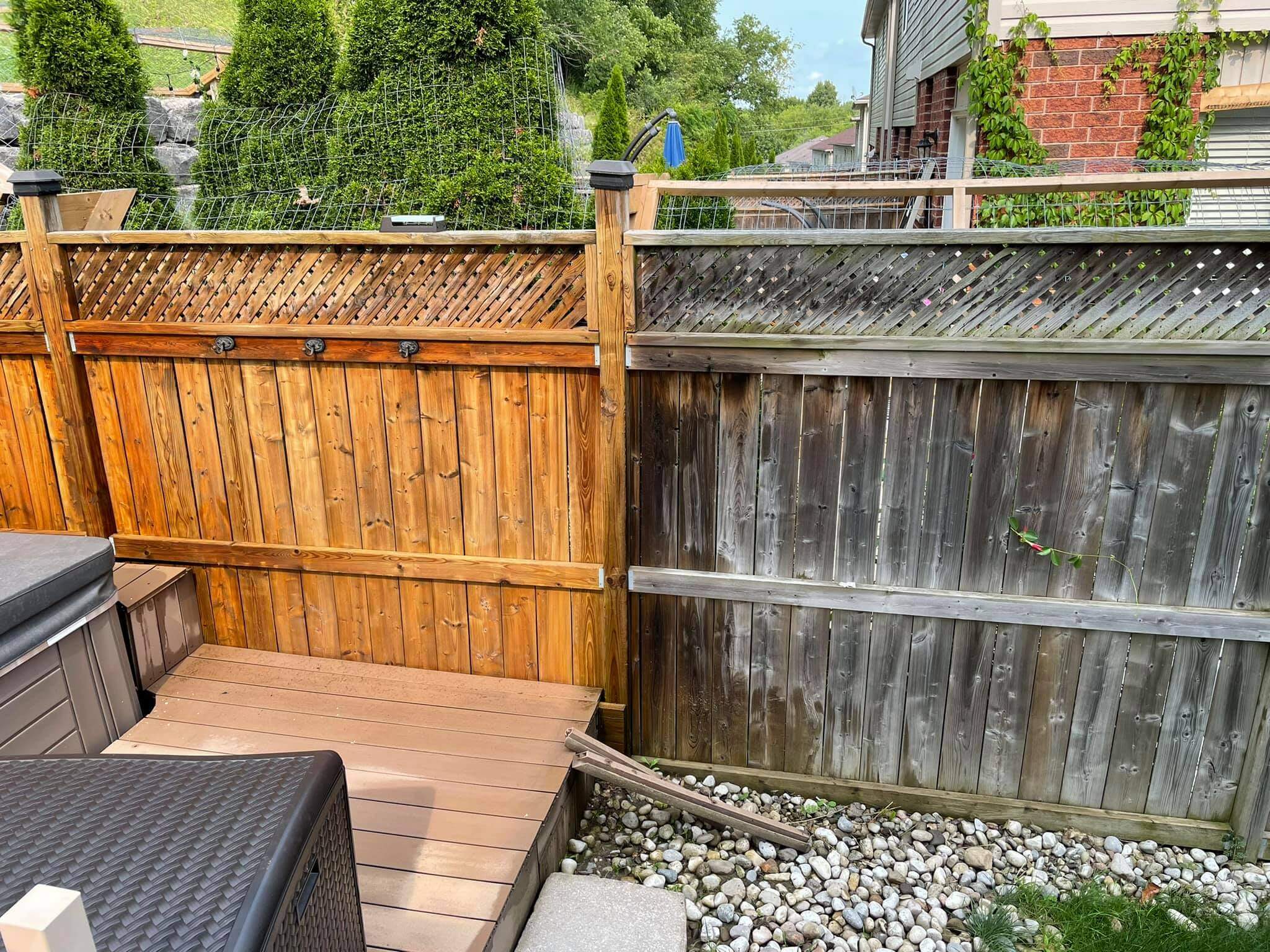
- Fences and durable exterior structures
- Patios and hardscape surfaces
- Construction dust that can be safely contained
- Commercial building exteriors requiring routine cleaning
The surface must still be inspected before work begins. Cracked masonry, deteriorated mortar, loose paint, failing caulking, exposed electrical components, and damaged siding can all affect how the area should be cleaned.
What Is Power Washing?
Power washing generally means using a pressure washer equipped with a burner or another system that heats the water.
Hot water is especially helpful when cleaning oily or greasy contamination. Heat reduces the viscosity of grease and allows detergents or degreasers to penetrate the buildup more effectively. This can improve cleaning results without relying entirely on higher pressure.
Where Hot-Water Power Washing Can Make a Difference
Hot-water cleaning is often used for:
- Grease around restaurant service areas
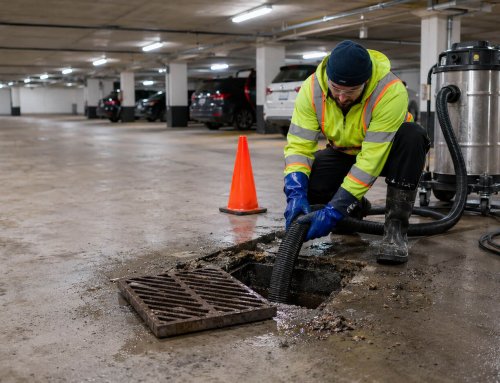
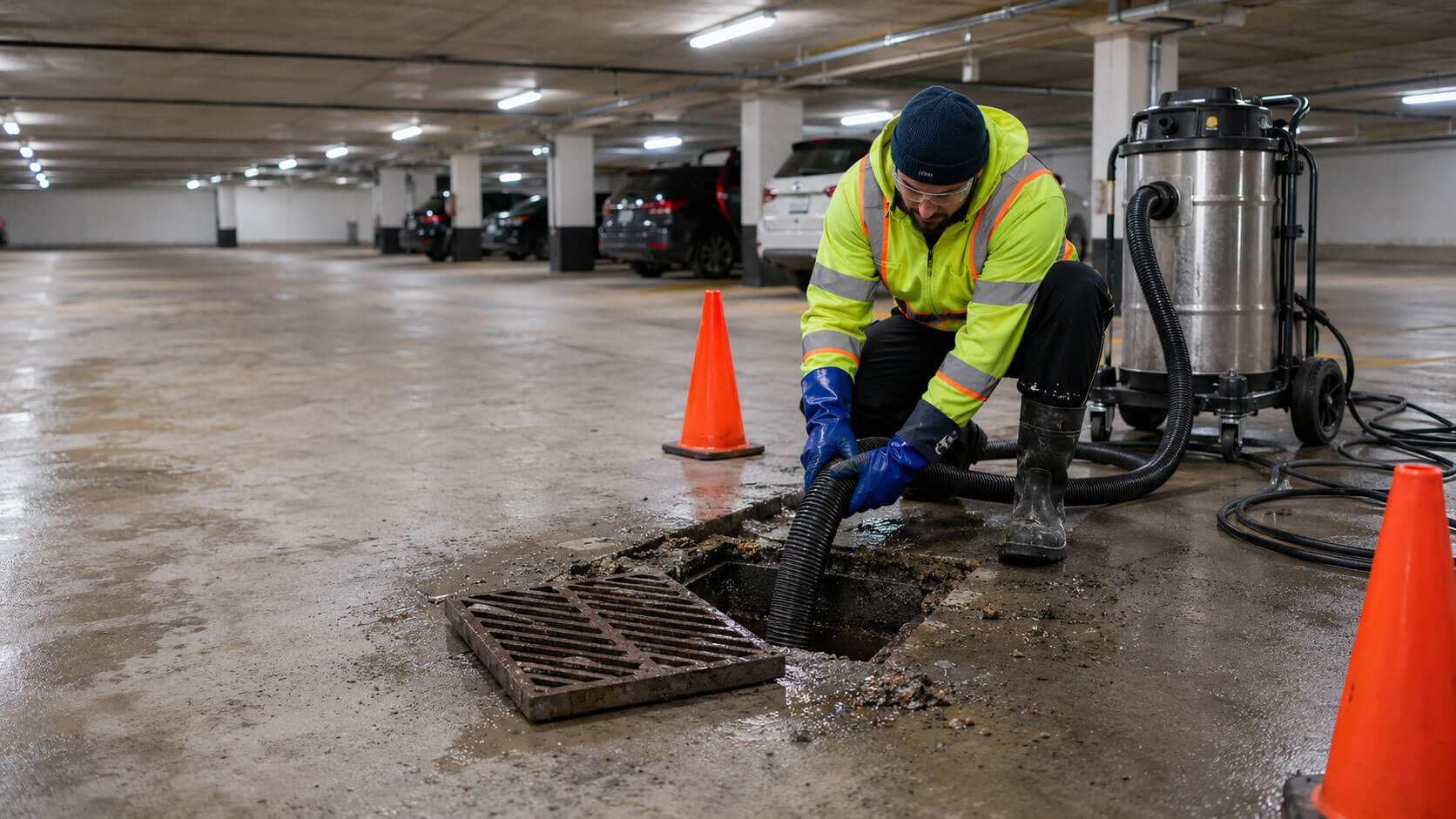
- Oil and automotive residue in parking garages
- Loading docks and delivery areas
- Waste and compactor areas
- Commercial equipment
- Food and beverage spills
- Heavily travelled concrete entrances
- Industrial floors and exterior work areas
- Petroleum-based staining on suitable hard surfaces
Hot water is not automatically the correct choice for every heavily soiled surface. The coating, sealant, substrate, drainage, and type of contamination must be considered first.
Pressure Washing and Power Washing Are Not Sanitizing Services by Default
One of the most common misconceptions is that hot-water power washing automatically disinfects or sanitizes an outdoor surface.
It does not.
Effective sanitization requires a defined process involving an appropriate product, concentration, surface contact time, temperature, and application method. Water that leaves a heated pressure washer also begins losing heat before and after it reaches the surface.
Hot water can improve the removal of grease and organic residue, but that is different from providing a verified sanitizing or disinfecting treatment.
The same caution applies to mould and mildew claims. Exterior washing can remove visible organic growth and the material feeding it, but contractors should not promise that pressure or hot water alone will permanently “kill mould spores.” Recurring growth may be related to shade, moisture, drainage, vegetation, or another condition that cleaning alone cannot correct.
The Surface Matters More Than the Name of the Service
A professional cleaning plan should begin with the surface, not the equipment.
Concrete
Concrete is durable, but it is not impossible to damage. Excessive pressure can leave wand marks, expose aggregate, or create an uneven appearance. Newer concrete, deteriorated concrete, decorative finishes, sealers, and coatings require additional care.
Oil that has penetrated deeply into porous concrete may improve significantly without disappearing completely. Setting realistic expectations is part of a proper site assessment.
Interlocking Pavers
Pavers can often be cleaned successfully, but pressure may remove jointing sand. Loose pavers, open joints, polymeric sand, and surface sealers should be identified before cleaning begins.
The work may need to be coordinated with re-sanding or sealing, depending on the condition of the installation.
Brick and Masonry
Brick quality, mortar condition, previous repairs, coatings, and age all influence the cleaning method. High pressure can damage soft brick or erode weakened mortar joints.
White mineral deposits, commonly called efflorescence, also require a different approach from ordinary dirt. More pressure is not necessarily the solution and can make some masonry problems worse.
Vinyl and Metal Siding
Siding is not normally cleaned by directing maximum pressure at the wall. Lower-pressure application, suitable cleaning products, and controlled rinsing are generally safer.
Care must be taken around overlapping panels, vents, soffits, windows, electrical fixtures, and openings where water can be forced behind the exterior surface.
Wood and Composite Decking
Wood fibres can be raised, gouged, or stripped by excessive pressure. Composite boards can also develop visible cleaning marks or discolouration if the wrong process is used.
Deck cleaning should account for the material, existing stain or coating, board condition, fasteners, and any planned refinishing.
Painted and Coated Surfaces
Pressure washing can expose paint or coating that is already failing. Before cleaning, the contractor should look for peeling, bubbling, cracking, chalking, and areas where water could enter behind the coating.
A test area is often advisable when the condition or compatibility of a finish is uncertain.
Choosing the Process Based on the Contamination
The substance being removed is just as important as the surface underneath it.
| Type of buildup | Likely cleaning approach |
|---|---|
| Loose dirt, dust and mud | Cold water and controlled pressure may be sufficient |
| Algae and organic growth | Appropriate cleaning solution, dwell time and low-pressure rinsing |
| Grease and food residue | Hot water, suitable degreaser and wastewater control |
| Automotive oil | Hot water and degreasing; complete stain removal may not be possible |
| Salt residue | Thorough flushing and controlled runoff |
| Gum | Localized hot-water treatment may be effective |
| Rust staining | Surface-specific chemical treatment rather than pressure alone |
| Efflorescence | Masonry-specific assessment and treatment |
| Paint or graffiti | Coating-specific removal process and containment |
| Construction residue | Identify the material before washing; some residue requires specialized treatment |
This is why a contractor should inspect the property before recommending a process. Two concrete surfaces may require entirely different cleaning methods because they contain different contaminants.
Toronto’s Winter Creates Specific Cleaning Problems
Toronto properties collect a mixture of road salt, grit, vehicle residue, dirt, and moisture throughout the winter.
By spring, this buildup is often concentrated around:
- Underground parking entrances
- Parking garage ramps
- Loading areas
- Storefronts
- Building entrances
- Concrete walkways
- Garbage and compactor areas
- Areas beside heavily travelled roads
Salt should not be treated as an ordinary cosmetic stain. It can collect in joints, corners, drainage channels, and porous surfaces. Effective post-winter cleaning may require sweeping or vacuuming loose material before washing, followed by controlled flushing and wastewater management.
This is more effective than immediately applying high pressure, which can spread gritty material across the property or direct contaminated water toward a catch basin.
Wastewater Control Is Part of Exterior Cleaning in Toronto
Exterior washing is not only about choosing hot or cold water. Contractors must also consider where the wastewater will go.
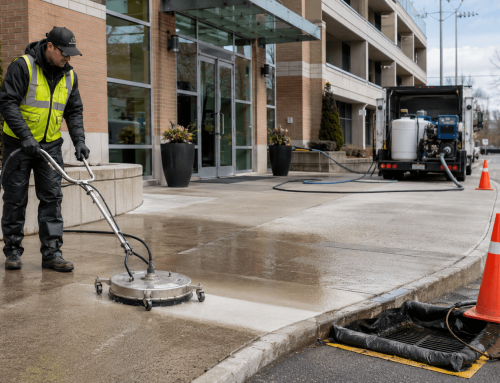
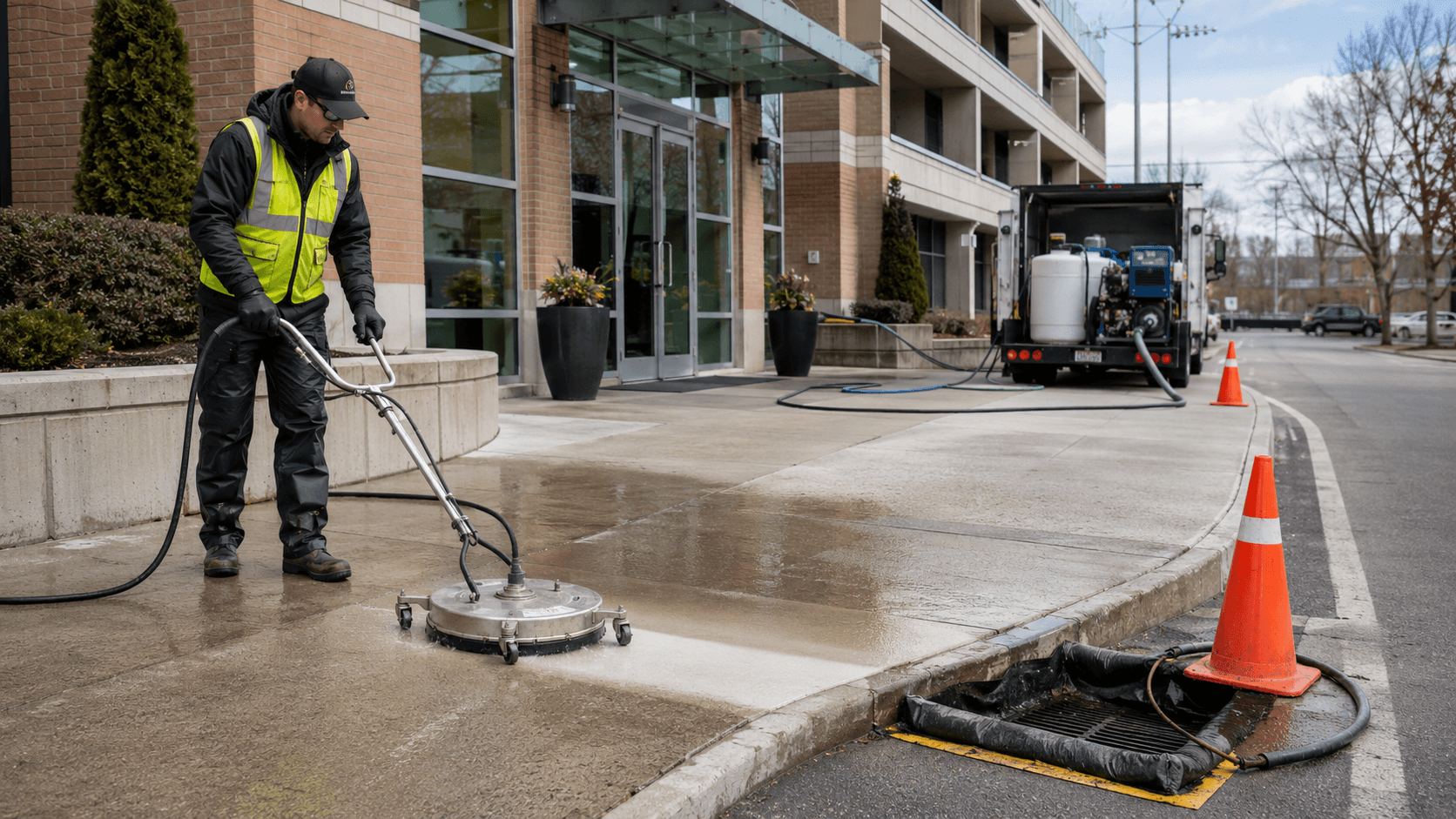
The City of Toronto states that wastewater from outdoor surface washing must not enter catch basins. This applies even when water alone is used because washing can dislodge oil, dirt, salt, chemicals, and other contaminants from the surface.
Depending on the site, the cleaning plan may include:
- Sweeping or collecting loose debris before washing
- Blocking or protecting nearby catch basins
- Containing wash water within the work area
- Using vacuum recovery equipment
- Collecting wastewater for appropriate disposal
- Confirming whether discharge to a sanitary drain is permitted
- Preventing runoff onto neighbouring properties or public sidewalks
Property owners can review the City’s guidance on washing outdoor surfaces and wastewater disposal.
Using a biodegradable detergent does not mean the resulting wastewater can enter a storm sewer. Once the water picks up oil, salt, sediment, or other surface contamination, the entire wastewater stream must be managed appropriately.
What Should Be Checked Before Exterior Cleaning Begins?
A professional site review should identify more than the visible dirt. It should also consider:
- Surface type and condition
- Existing coatings or sealers
- Cracks, loose mortar, peeling paint, or damaged caulking
- Type and severity of contamination
- Nearby doors, windows, vents, and electrical fixtures
- Pedestrian and vehicle traffic
- Landscaping and neighbouring property
- Catch basins and drainage routes
- Access to water and power
- Wastewater containment requirements
- Hours when the work can be completed safely
- Areas requiring testing before full cleaning
For commercial and multi-residential properties, scheduling is especially important. Entrances may need to remain open, parking areas may require temporary closures, and wet surfaces must be controlled to reduce slip risks.
When Cold Water Is Usually Enough
Cold-water pressure washing may be the practical choice when:
- The buildup is primarily dirt, dust, mud, or loose debris
- The surface does not contain significant grease or oil
- A suitable cleaning product can loosen the contamination
- Lower temperatures are more appropriate for the coating or material
- The area is receiving routine maintenance rather than restorative cleaning
Cold water does not mean weak cleaning. With the correct flow, chemistry, dwell time, and technique, it can handle a wide range of exterior maintenance work.
When Hot Water Is Worth Using
Hot-water power washing becomes more valuable when:
- Grease or oil is present
- The property includes restaurant service areas
- Vehicle residue has accumulated in a parking facility
- Gum or sticky organic material must be removed
- The cleaning solution will perform better at an elevated temperature
- Reducing repeated passes can help limit the pressure applied to the surface
Heat is a cleaning tool—not a substitute for the correct detergent, technique, or wastewater controls.
Questions to Ask an Exterior Cleaning Contractor
Instead of asking only whether a company offers pressure washing or power washing, ask:
- How will you determine the correct pressure and temperature?
- What cleaning products will be used?
- Will you test a small area first?
- How will nearby catch basins be protected?
- How will the wastewater be contained or recovered?
- Are there stains or damaged areas that may not be fully corrected?
- How will doors, windows, landscaping, and electrical fixtures be protected?
- Can the work be scheduled around occupants, customers, or vehicle traffic?
The answers will tell you much more than the name of the equipment being used.
Exterior Cleaning for Toronto Properties
There is no single pressure-washing setting that is appropriate for every property. Routine dirt may require cold water and a controlled rinse. Grease may require hot water and degreaser. Organic growth may respond better to a surface-compatible cleaning solution applied at lower pressure.
Royal Wash assesses the surface, contamination, drainage, access, and surrounding property before determining the cleaning process. We provide exterior cleaning for commercial, multi-residential, and residential properties throughout Toronto and the GTA.
Call 888-334-5550 to discuss your property or request a free quote.