What Toronto Owners Should Know
Power washing is often associated with curb appeal, but appearance is only one reason to clean exterior surfaces. On commercial, industrial, multi-unit and residential properties, regular cleaning can remove contaminants that make surfaces harder to inspect, unpleasant to use or potentially slippery when wet.
However, power washing has limits. It cannot repair cracked concrete, deteriorated mortar, wood rot, failed sealants or drainage problems. The cleaning products used also need to be selected carefully. Labels such as “green” or “biodegradable” do not automatically make a product safe for every surface, landscape or drainage system.
Effective exterior cleaning starts with an assessment of the property, the surface and the material being removed.
Exterior Cleaning Is Maintenance, Not Structural Repair
Power washing can support a property maintenance program, but it should not be described as a way to prevent every form of exterior damage.
Cleaning can remove:
- Dirt and traffic residue
- Road salt and winter grime
- Algae and other surface growth
- Oil and grease residue
- Gum and food-related buildup
- Loose paint and surface contamination
- Dust from loading and industrial activity
Removing this material can make the underlying surface easier to inspect. Cracks, failed coatings, worn pavement markings and damaged joints may become more visible once heavy dirt has been removed.
Cleaning does not correct the underlying cause of these problems. If water is entering through failed caulking, for example, washing the exterior will not restore the seal. Similarly, cleaning deteriorated wood will not reverse rot.
A responsible contractor should identify obvious surface concerns before starting and explain when cleaning alone is unlikely to resolve the issue.
Why Toronto Properties Accumulate Exterior Buildup
Properties throughout Toronto and the GTA experience a combination of traffic, moisture and seasonal exposure.
Winter Salt and Sand
Parking garages, ramps, entrances and sidewalks collect road salt, sand and dirty snow carried in by vehicles and footwear. When the snow melts, water may drain away while solid material remains behind.
Spring cleaning helps remove this residue from visible and high-traffic areas. It also creates a better surface for inspecting concrete, coatings, drains and pavement markings after winter.
Vehicle and Traffic Residue
Properties near busy roads can develop a dull film across brick, concrete, metal panels and other exterior finishes. Parking facilities also accumulate tire residue, oil spots and dirt carried in by vehicles.
These contaminants may require different treatments. Traffic film may respond to detergent and controlled washing, while oil that has penetrated concrete may require degreasing and cannot always be removed completely.
Moisture and Organic Growth
Shaded or damp areas can develop algae and other organic buildup. This commonly appears on walkways, retaining walls, siding, decks and sections of a building that receive limited sunlight.
Organic growth on a walking surface can become slippery when wet. Cleaning can remove the buildup, but recurring growth may indicate shade, drainage or moisture conditions that should also be addressed.
Commercial Activity
Restaurants, loading areas, waste enclosures, storefronts and service entrances collect contaminants that are specific to how the property is used. Grease, gum, spills and delivery traffic may require more frequent attention than lower-traffic areas.
The cleaning schedule should reflect the site rather than follow a generic annual recommendation.
Maintenance Benefits Beyond Appearance
Cleaner Walking and Working Areas
Algae, grease, wet leaves and certain types of residue can reduce traction. Removing this buildup can help improve the condition of entrances, walkways, ramps and service areas.
Cleaning cannot make damaged or improperly graded pavement safe. Cracks, heaving, potholes and drainage problems still need appropriate repair.
Better Surface Inspections
Heavy grime can conceal deterioration. Once a surface has been cleaned, property managers can more easily inspect:
- Concrete cracks and spalling
- Failed Failed joint sealants
- Loose mortar
- Damaged coatings
- Rust staining
- Drainage problems
- Faded line markings
- Areas of recurring moisture
This can be particularly useful during a spring property inspection or before maintenance work is scheduled.
Preparation for Other Work
Some repairs, coatings and painting projects require a clean, properly prepared surface. Exterior cleaning may be one step before:
- Repainting curbs or pavement markings
- Applying compatible concrete coatings
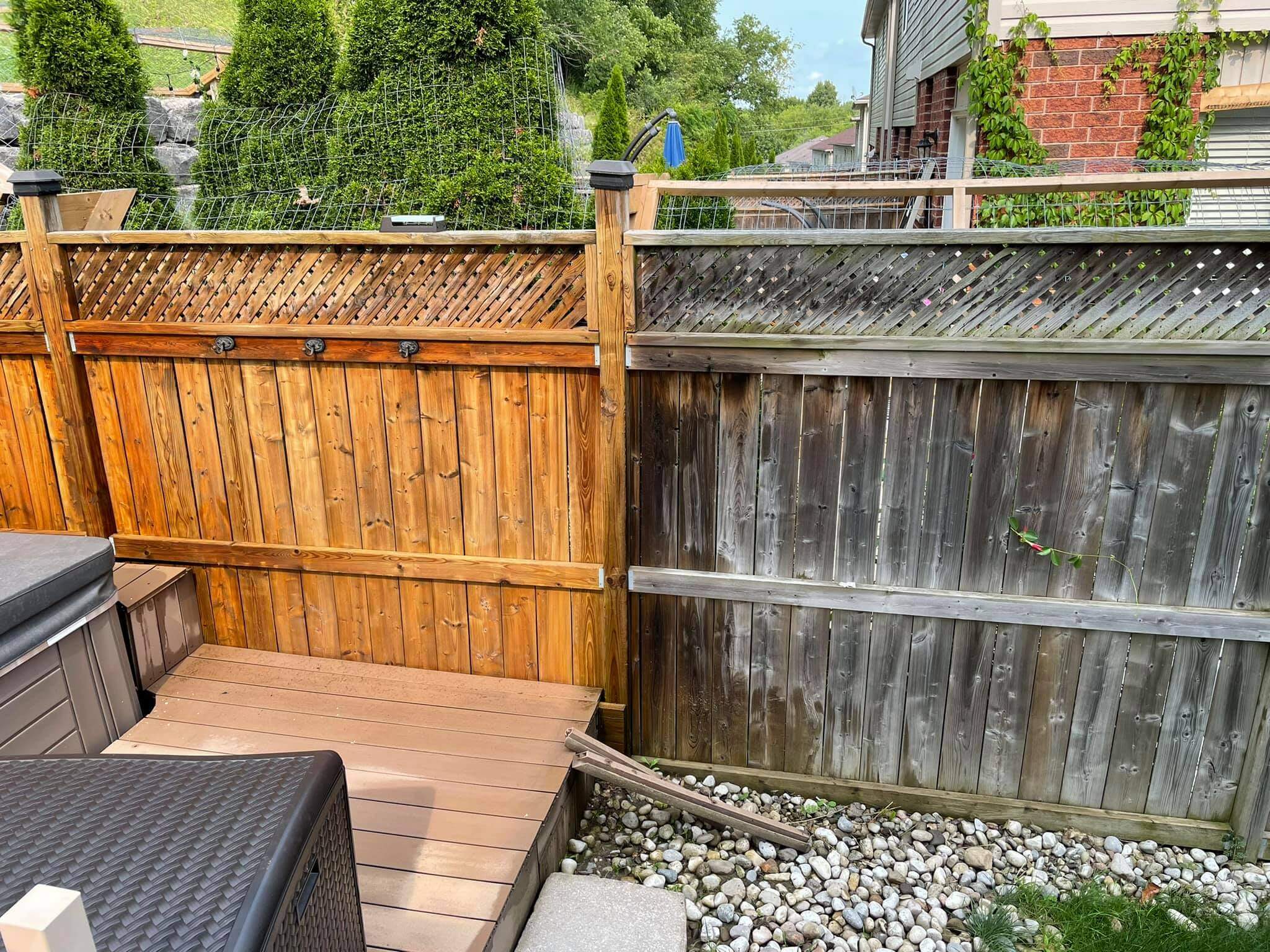
- Staining a deck or fence
- Repairing masonry
- Replacing failed sealant
- Updating commercial entrances
Cleaning requirements depend on the product and work being completed. The surface must also be allowed to dry for the required period before coatings or finishes are applied.
A More Consistent Property Appearance
Entrances, sidewalks and exterior walls shape how tenants, customers and visitors perceive a property. Routine cleaning helps prevent one heavily soiled area from making an otherwise well-maintained building look neglected.
Royal Wash provides exterior building cleaning for commercial and residential properties across Toronto and the GTA.
Different Surfaces Require Different Methods
Power washing should never be treated as a single process that works the same way everywhere.
| Surface | Common concerns | Cleaning considerations |
|---|---|---|
| Concrete | Salt, traffic residue, oil and surface dirt | Surface condition, coatings, age and stain penetration |
| Brick and masonry | Pollution, organic growth and mineral deposits | Mortar condition, porosity and previous repairs |
| Siding and stucco | Dirt, algae and runoff marks | Openings, seals, finish condition and water intrusion |
| Wood and composite materials | Dirt and organic buildup | Grain damage, coatings and manufacturer instructions |
| Painted metal and doors | Traffic film and weather exposure | Paint adhesion, hardware and electrical components |
| Parking garages | Sand, salt, oil and vehicle residue | Drainage, wash-water collection and occupied work areas |
A hard surface does not always require high pressure. In some situations, an appropriate cleaner, heated water or additional dwell time produces a better result with less surface impact.
Delicate exterior materials may need soft washing instead of conventional pressure washing. Soft washing uses lower pressure with a cleaning solution selected for the surface and contaminant.
What “Eco-Friendly” Exterior Cleaning Actually Means
Claims about environmentally friendly power washing are often too vague. A cleaning product may be biodegradable while still requiring careful dilution, handling and disposal.
Responsible product selection considers:
- The material being cleaned
- The contaminant being removed
- Manufacturer instructions
- Required dilution
- Necessary dwell time
- Nearby plants and landscaping
- People and animals using the area
- How the wash water will be collected
- Applicable wastewater requirements
No cleaning product should automatically be described as harmless to children, pets, plants or wildlife. Concentration, exposure and application all matter.
Cleaning Products Should Never Be Mixed
Combining cleaners to make them “stronger” can create a serious hazard. Health Canada advises never mixing bleach with other cleaning products. Bleach can react with ammonia or acidic products, including vinegar, and release toxic gases. Review Health Canada’s warning.
Professional crews should follow the product label and relevant safety information. They should also use the protective equipment specified for the product and application.
Landscaping Still Needs Protection
Even when an appropriate exterior cleaner is being used, surrounding plants may need protection. The correct steps depend on the product and can include controlled application, pre-wetting, rinsing and preventing concentrated solution from collecting in one location.
People and pets should remain outside the work area until cleaning is complete and any applicable label instructions have been satisfied. It is inaccurate to promise that an area is automatically safe for immediate use simply because a biodegradable product was used.
Wash-Water Control Is Part of the Cleaning Process
Outdoor power washing produces wastewater containing whatever was removed from the surface. This may include oil, salt, sediment, paint particles, detergent and other contaminants.
The City of Toronto states that wastewater from outdoor washing must not reach catch basins. Its guidance includes water used for building restoration, graffiti removal and washing sidewalks, alleys and other outdoor surfaces. The City also notes that washing with water alone can dislodge contaminants. See Toronto’s outdoor washing requirements.
Before beginning a project, the contractor should determine:
- Where the water will naturally travel
- Whether storm drains or catch basins are nearby
- What contaminants are present
- Whether water needs to be contained or recovered
- How solid debris will be collected
- How the recovered material will be handled
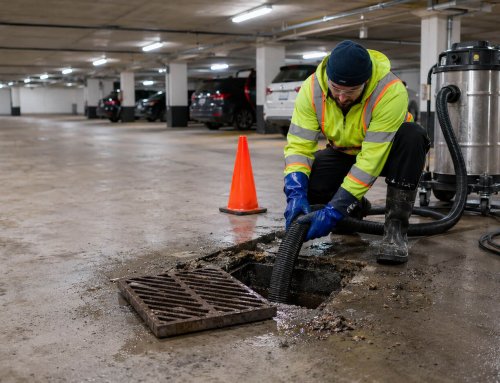
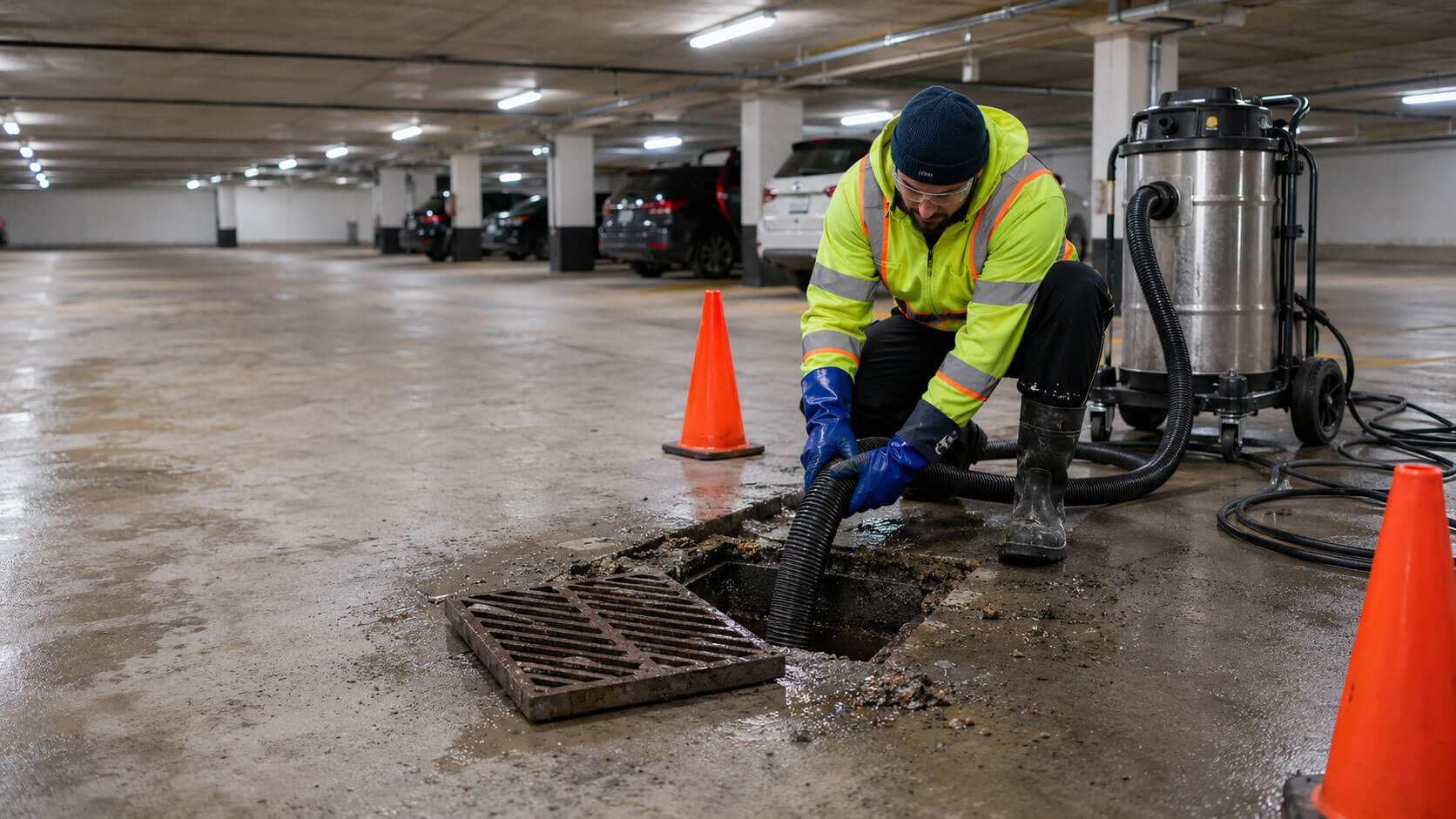
This is especially important during parking garage cleaning, where water, loosened sediment and underground drainage systems need to be considered together.
Simply directing dirty water toward the nearest drain is not a complete cleaning plan.
How Often Should a Property Be Power Washed?
There is no universal schedule. Cleaning frequency depends on the property’s location, use and exposure.
A property may need more frequent service when it has:
- Heavy pedestrian or vehicle traffic
- Shaded and damp exterior areas
- Food-service or waste-handling activity
- Loading docks and delivery areas
- Significant winter salt accumulation
- Nearby construction
- Mature trees or landscaping
- Highly visible customer entrances
- Recurring algae or surface staining
For many Toronto properties, spring is a useful time to inspect exterior surfaces after winter. A second inspection may be appropriate before fall or whenever visible buildup starts affecting the appearance or use of the property.
The objective is to clean when conditions justify it—not to sell every property the same schedule.
Questions to Ask an Exterior Cleaning Company
Before approving a commercial power-washing project, ask:
- Which cleaning method will be used on each surface?
- How will windows, doors, electrical components and nearby property be protected?
- What products will be used, and why are they appropriate?
- How will wash water and loosened debris be controlled?
- Are there stains or damaged areas that may not respond to cleaning?
- How will pedestrian, tenant and vehicle access be managed?
- Will a test area be completed before the full surface is cleaned?
Clear answers help establish realistic expectations and reduce the risk of unexpected damage or disruption.
Plan Your Exterior Cleaning With Royal Wash
Power washing can support regular property maintenance by removing surface buildup, improving the visibility of exterior conditions and keeping high-traffic areas looking cared for. Its value depends on selecting the right method and managing the work responsibly.
Royal Wash provides power washing and exterior cleaning for commercial, industrial, multi-unit and residential properties across Toronto and the GTA. Our team assesses the surface, staining, access requirements and surrounding work area before recommending a cleaning process.
Contact Royal Wash to discuss exterior cleaning for your property.
Frequently Asked Questions
Can power washing prevent structural damage?
Power washing can remove buildup and make existing surface problems easier to see. It cannot prevent or repair damage caused by failed waterproofing, deteriorated materials, structural movement or poor drainage.
Does power washing remove every oil stain?
Not always. Degreasing and heated water may improve oil stains, but oil can penetrate porous concrete. Complete removal depends on the age and depth of the stain and whether the surface has been sealed.
Are biodegradable cleaners safe for storm drains?
Not automatically. A biodegradable product can still carry contaminants removed from the surface. Toronto’s outdoor washing rules state that wash water must not reach catch basins.
Is soft washing environmentally friendly?
Soft washing uses lower water pressure, but its overall environmental impact depends on the cleaning product, application, runoff control and disposal method. Low pressure alone does not make a process environmentally safe.
Does power washing increase property value?
A clean exterior can improve presentation, but it is not accurate to promise that power washing will increase a property’s market value. Location, condition, repairs and market demand remain much more significant factors.