Power washing can make a significant difference to a building exterior, sidewalk, driveway, loading area, or parking garage. However, the quality of the result depends on much more than pointing a high-pressure stream of water at the surface.
Toronto properties accumulate road film, winter salt residue, oil, organic growth, gum, dirt, and other forms of buildup. Each contaminant behaves differently, and each surface has its own limits. A method that works well on sound concrete could damage wood, aging masonry, painted finishes, or asphalt shingles.
In everyday conversation, “power washing” and “pressure washing” are often used interchangeably. Technically, power washing generally involves heated water, while pressure washing may use unheated water. In either case, professional exterior cleaning involves matching the pressure, water flow, temperature, cleaning solution, and technique to the job.
Here are five common misconceptions that can lead to poor results or unnecessary property damage.
Myth 1: More Pressure Produces a Better Clean
Fact: Effective cleaning depends on the entire process, not maximum pressure.
It is easy to assume that stubborn dirt simply needs more force. In practice, increasing the pressure without understanding the surface can create new problems while leaving the original stain behind.
Excessive pressure can:
- Etch lines into concrete
- Raise or splinter wood grain
- Damage mortar between bricks
- Strip paint and protective coatings
- Force water behind siding
- Leave visible wand marks across a surface
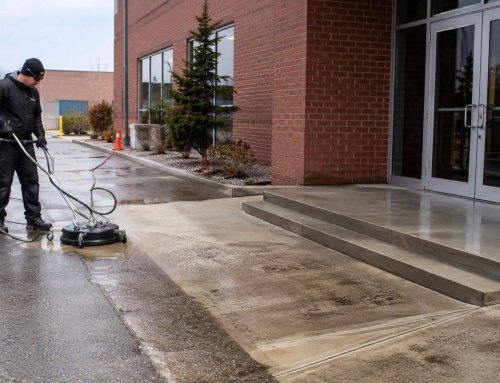
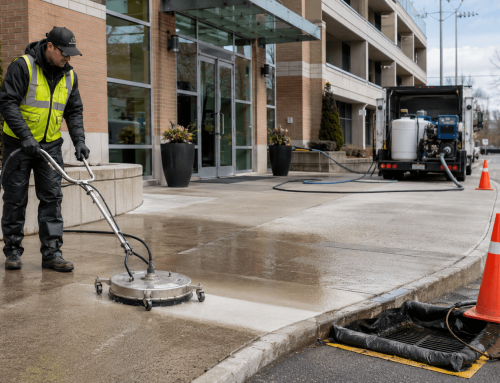
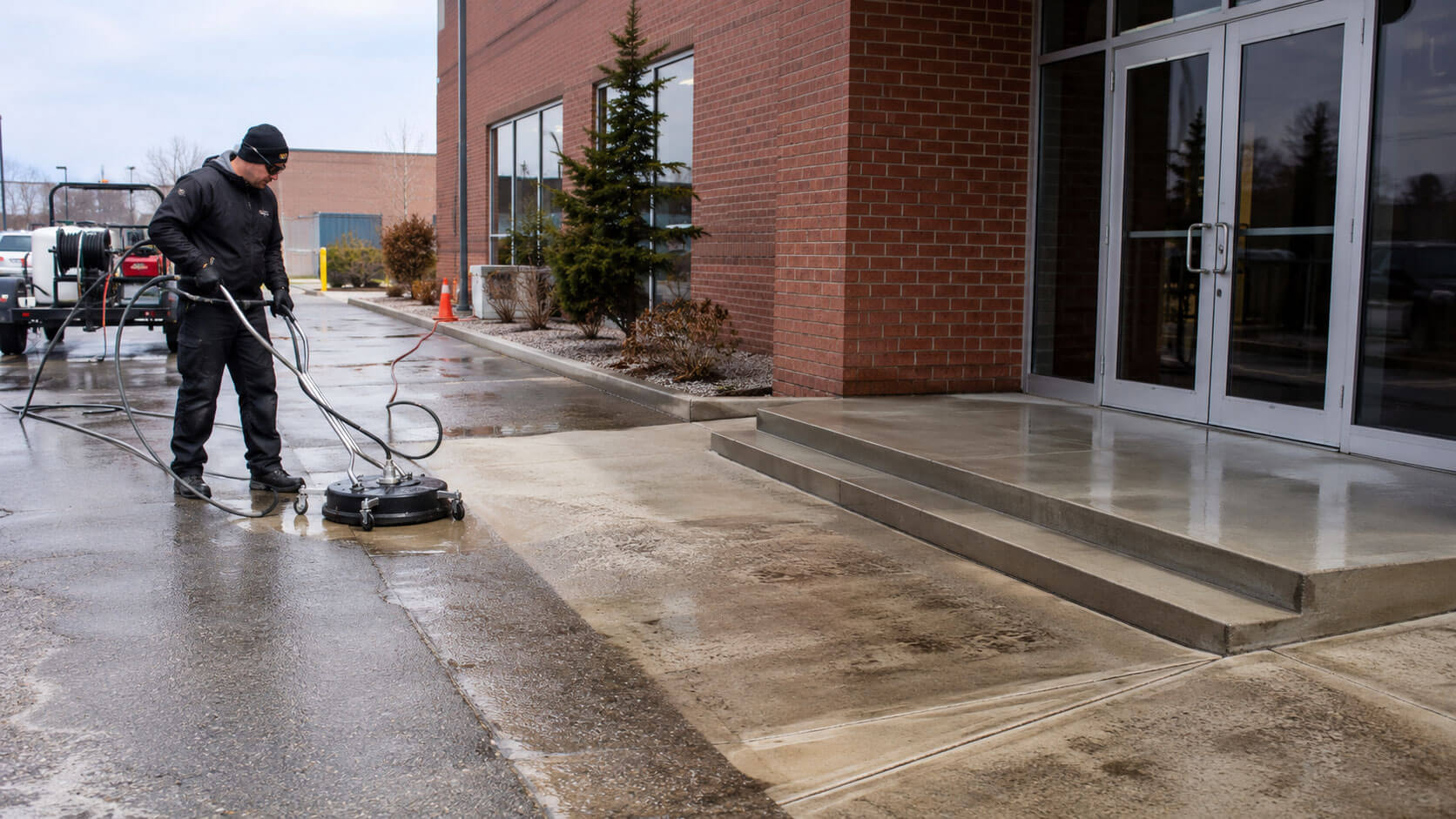
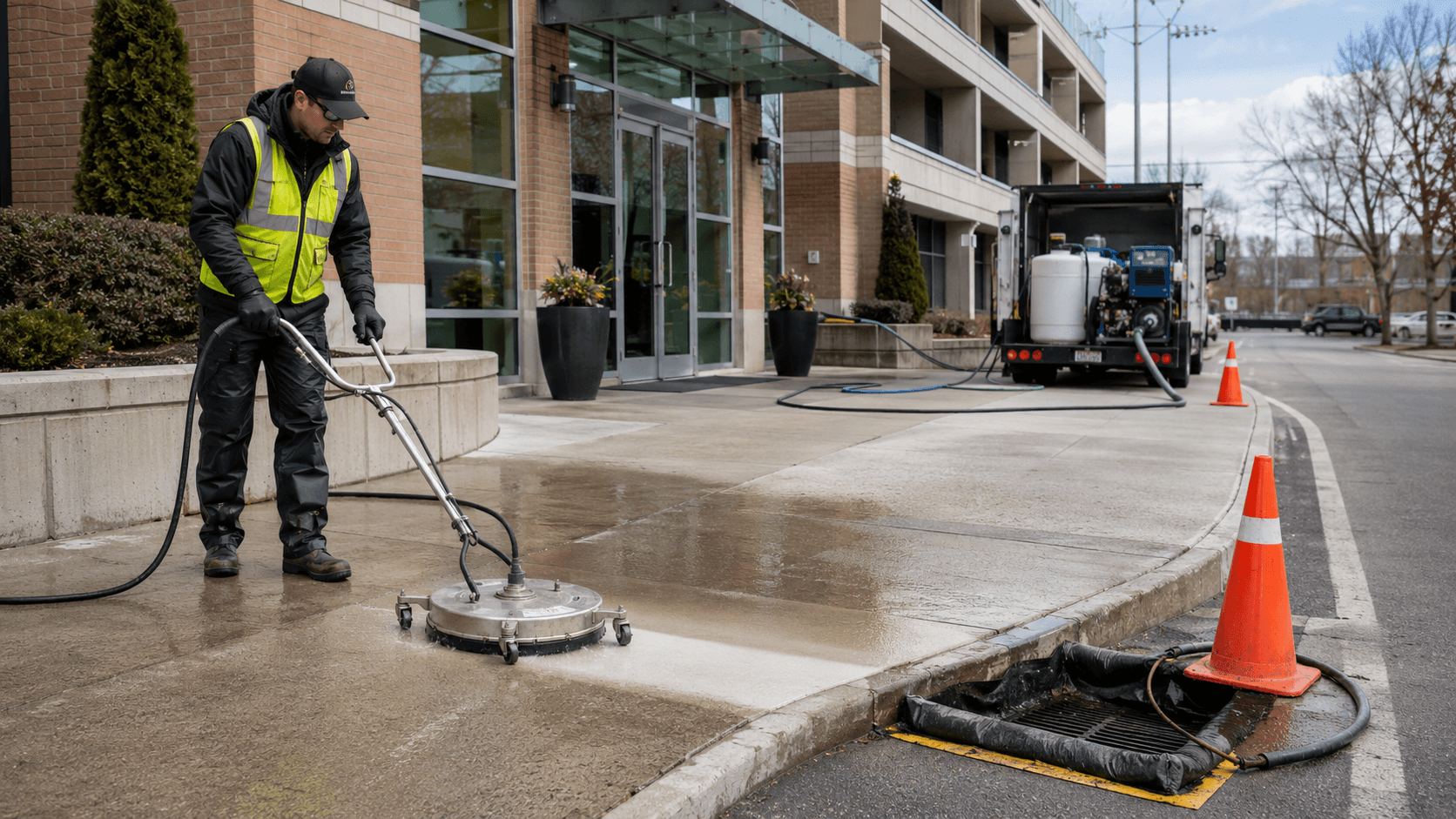
Professional cleaning relies on controlled pressure combined with appropriate water flow, nozzle selection, cleaning solutions, dwell time, and rinsing. On large concrete areas, a surface cleaner can also produce a more uniform finish than repeatedly moving a narrow wand across the pavement.
For oil, grease, and heavy traffic residue, heated water or an appropriate pre-treatment may accomplish more than simply increasing the pressure. For organic buildup, a targeted cleaning solution may be needed to address what is growing on the surface.
The goal is not to use as much pressure as possible. It is to use the least aggressive method that can complete the work effectively.
Myth 2: Every Exterior Surface Can Be Cleaned the Same Way
Fact: The material and its condition determine the cleaning method.
Two surfaces can look equally dirty but require very different treatment. Before cleaning begins, the technician should consider the material, age, condition, finish, previous repairs, and type of contamination.
Concrete and Interlocking Pavers
Sound concrete can normally tolerate more pressure than wood or siding. Even so, excessive pressure can leave etching, lines, or an uneven finish. Interlocking pavers also require care around joints and loose polymeric sand.
Brick and Masonry
Brick may appear extremely durable, but deteriorating mortar, spalling, previous repairs, and porous masonry can make aggressive washing risky. White deposits may also be efflorescence or mineral staining rather than ordinary dirt, which means water pressure alone may not correct the problem.
Siding and Stucco
Vinyl siding, painted surfaces, EIFS, and stucco generally require a lower-pressure approach. Water should not be driven behind the exterior finish or into gaps around windows, vents, and electrical fixtures. Royal Wash uses both pressure washing and surface-appropriate exterior building cleaning for residential and commercial properties.
Wood and Composite Decking
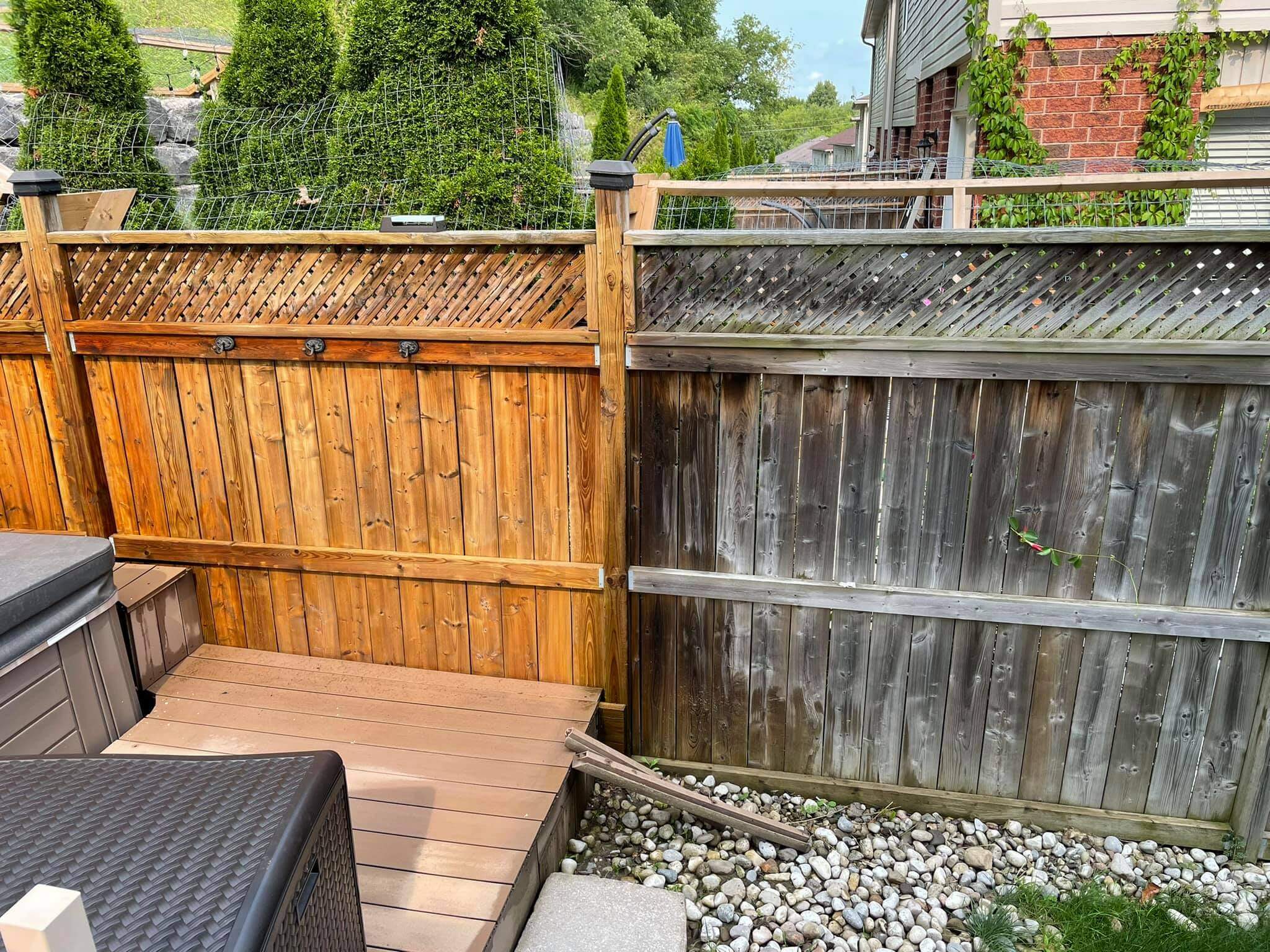
Wood can be marked or splintered when the pressure is too high or the nozzle is held too close. Composite materials may also have manufacturer-specific cleaning requirements. The surface condition and finish should be reviewed before work begins.
Roofing Materials
Asphalt shingles should not be treated like concrete. Roof cleaning normally requires specialized low-pressure methods rather than direct high-pressure washing. Royal Wash offers soft washing for surfaces that cannot safely tolerate conventional pressure washing.
A professional exterior cleaner does not use one standard setting everywhere. The method changes with the surface.
Myth 3: Water Pressure Will Remove Every Stain
Fact: Many stains require pre-treatment, heat, or a specialized cleaning product.
Pressure washing is excellent for removing loose dirt and surface buildup. However, some contaminants penetrate porous materials or react chemically with the surface. In those cases, water pressure is only one part of the treatment.
| Contaminant | Why pressure alone may not be enough | Typical approach |
|---|---|---|
| Oil and grease | They can soak into porous concrete | Degreaser, dwell time and, where suitable, heated water |
| Algae and organic growth | Surface growth can remain in pores and shaded areas | Appropriate treatment followed by controlled rinsing |
| Rust | Rust bonds to or discolours the surface | Surface-compatible rust treatment |
| Hard-water deposits | Minerals remain after the water evaporates | Mineral deposit treatment and careful rinsing |
| Gum | Old gum adheres tightly to pavement | Heat, spot treatment, or mechanical removal |
| Graffiti | Paint can penetrate brick, concrete, and other porous materials | Test area, paint remover and controlled cleaning |
Results also depend on how long the stain has been present, whether the surface is sealed, and whether previous cleaning attempts have altered it. Some deeply absorbed stains can be improved substantially without disappearing completely.
Professional graffiti removal, for example, involves more than using high pressure. The coating and underlying surface must both be considered to reduce the risk of leaving a shadow or damaging the finish.
Myth 4: A Rental Machine Produces the Same Result as Professional Equipment
Fact: Equipment matters, but experience and job planning matter just as much.
A homeowner may be able to clean a small, durable, ground-level area with a rental machine. However, larger properties and more complicated surfaces introduce additional risks.
Common DIY problems include:
- Holding the nozzle too close to the surface
- Cleaning unevenly and leaving visible lines
- Using the wrong nozzle or detergent
- Damaging painted, wooden, or aging surfaces
- Spraying water toward doors, vents, outlets, or wall openings
- Working from ladders with equipment that produces substantial recoil
- Allowing dirty water to travel into unintended areas
- Failing to protect nearby vehicles, landscaping, pedestrians, or building entrances
Commercial work also requires planning around tenants, customers, deliveries, parked vehicles, pedestrian routes, and drainage. The crew may need to divide the property into work zones, control hoses, place warning signs, protect nearby surfaces, and schedule the work during quieter hours.
The distinction is not simply that professional equipment is more powerful. A qualified crew should know when that power is appropriate—and when it needs to be reduced.
Myth 5: Power Washing Is Only About Appearance
Fact: Exterior cleaning also supports regular property maintenance.
A cleaner property makes a stronger first impression, but appearance is not the only consideration.
At commercial properties, dirt, grease, algae, gum, and winter residue can collect around entrances, sidewalks, loading areas, waste enclosures, and parking facilities. Certain forms of buildup can make walking surfaces more slippery, especially when wet. Dirt can also conceal cracks, worn coatings, drainage problems, and other areas that require attention.
Cleaning may be useful before:
- Inspecting concrete and paved areas
- Applying certain coatings or sealers
- Repainting curbs or pavement markings
- Completing exterior repairs
- Opening patios and outdoor areas for the season
- Preparing a property for tenants, customers, or an inspection
In Toronto, spring cleaning is particularly valuable because it removes the grime, grit, and salt residue left after winter. Properties near high-traffic roads may need attention more frequently because vehicle exhaust and road film can quickly dull entrances and exterior walls.
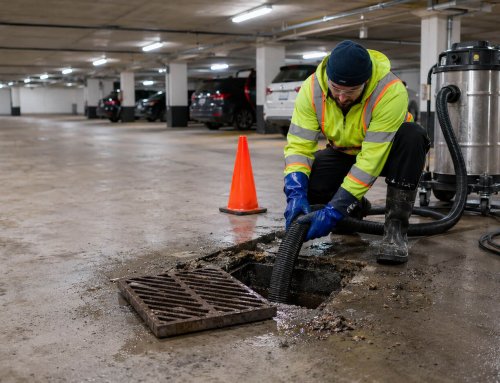
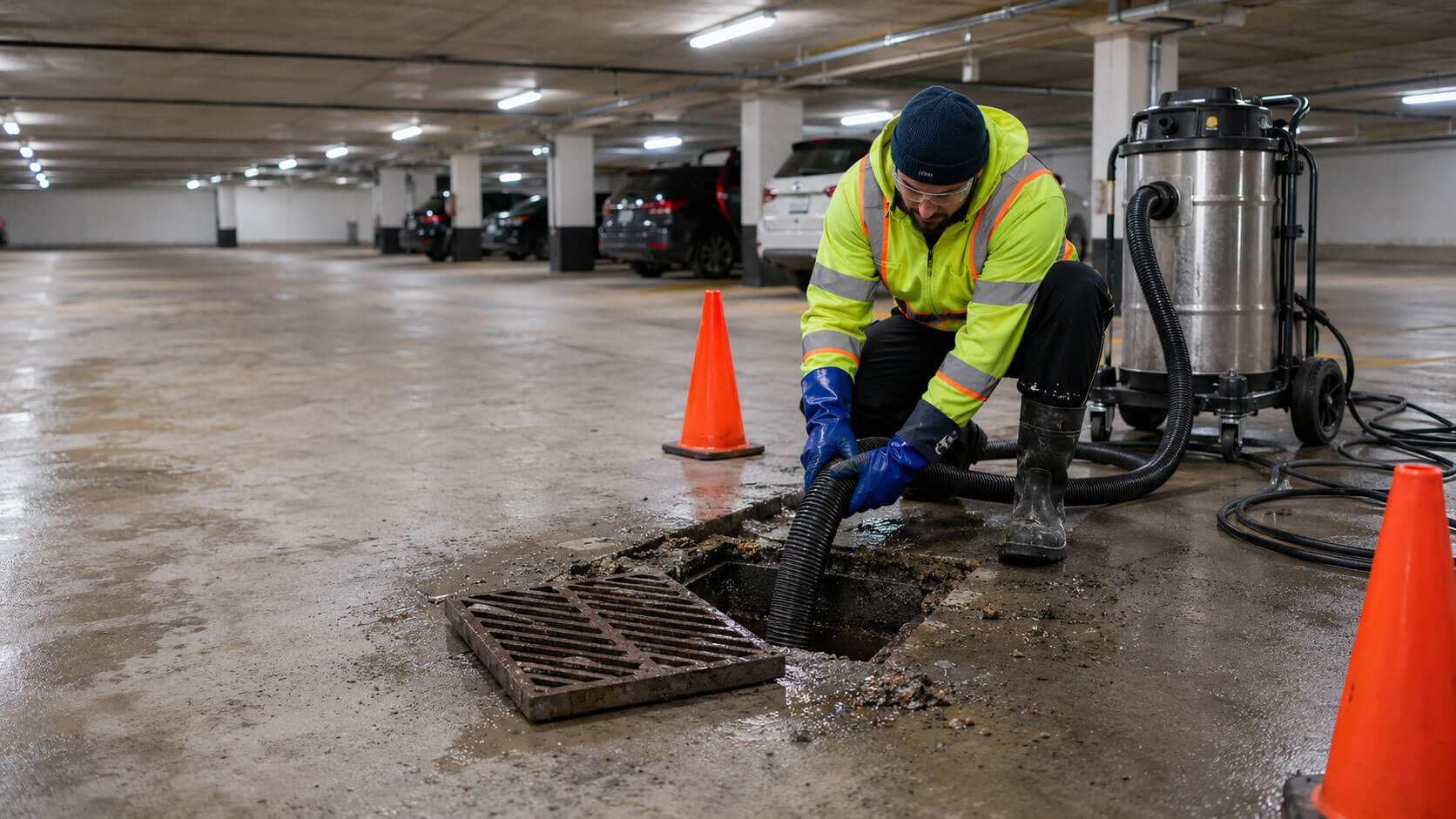
Services such as driveway and sidewalk cleaning and underground parking garage cleaning can therefore form part of a broader property maintenance plan rather than being treated as occasional cosmetic work.
How Professionals Choose the Right Cleaning Method
A responsible exterior cleaning process begins before the equipment is turned on. The crew should first determine:
- What material is being cleaned
- Whether the surface is sound, painted, sealed, cracked, or previously repaired
- What type of dirt, stain, or organic buildup is present
- Whether pressure, soft washing, heated water, or pre-treatment is appropriate
- What nearby areas need to be protected
- How water and loosened debris will be controlled
A small test area may be used when the surface condition or likely result is uncertain. This helps the technician confirm the cleaning method before proceeding across a larger area.
That assessment is especially important on mixed commercial properties. A single job may include concrete sidewalks, brick walls, painted loading doors, metal panels, awnings, and sensitive entrance areas. Each portion may require different equipment or settings.
Arrange Professional Power Washing in Toronto
Power washing is effective, but it is not a one-setting solution for every surface and stain. The best results come from identifying the contaminant, evaluating the material, and selecting the appropriate combination of pressure, water temperature, cleaning solution, and technique.
Royal Wash provides exterior cleaning for commercial, industrial, multi-unit, and residential properties across Toronto and the GTA. Our team assesses the work area before cleaning and adjusts the process to suit the condition of the property.
Contact Royal Wash to discuss your property and request a quote for professional power washing or pressure washing in Toronto.
FAQ
Can power washing damage concrete?
Yes, concrete can be etched or left with visible cleaning lines when excessive pressure is used. Newly installed, deteriorated, cracked, or previously coated concrete may require additional care.
Is soft washing the same as pressure washing?
No. Soft washing uses low-pressure application and cleaning solutions to treat surfaces that may not tolerate conventional pressure washing. The appropriate method depends on the material and the type of buildup.
Can power washing completely remove oil from concrete?
It can significantly improve many oil stains, especially when a suitable degreaser or heated water is used. Complete removal cannot always be guaranteed because oil may penetrate deeply into porous concrete.
How often should a commercial property be pressure washed?
The schedule depends on traffic, shade, moisture, surrounding trees, winter salt exposure, and the type of business. Busy entrances and food-service areas may need cleaning more frequently than lower-traffic portions of the property.