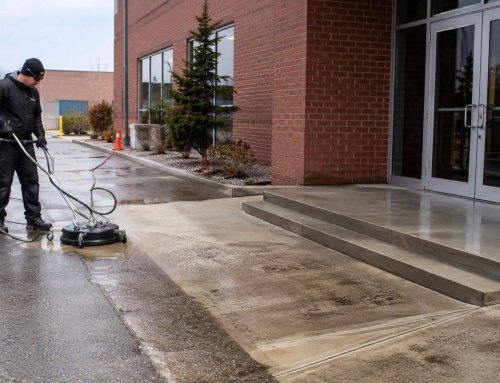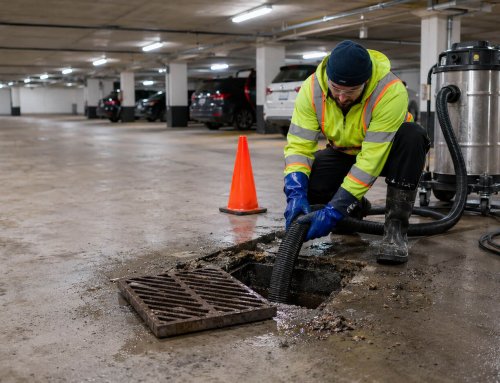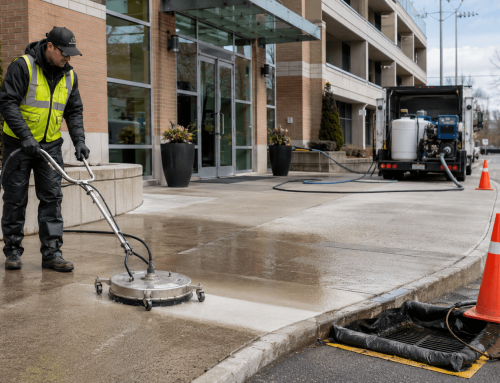
Power washing can remove dirt, traffic film, algae, oil residue and seasonal buildup from many exterior surfaces. However, the same equipment can damage concrete, wood, masonry, siding, paint and building components when used incorrectly.
Safe power washing involves more than selecting a pressure setting. The operator must consider the surface, nozzle, water flow, temperature, cleaning product, working distance and condition of the property. The surrounding work area and wash-water drainage must also be managed before cleaning begins.
This guide covers five things you should do—and five mistakes you should avoid—when planning an exterior cleaning project.
Five Things You Should Do
1. Do Inspect the Surface Before Cleaning
Begin by identifying both the surface and the material that needs to be removed. A setting that works on sound concrete may be too aggressive for aging brick, painted siding or weathered wood.
Look for:
- Cracks or spalling in concrete
- Loose or deteriorated mortar
- Peeling paint or failing coatings
- Soft, rotted or splintered wood
- Gaps around siding, windows and doors
- Loose caulking or previous repairs
- Unprotected electrical components
- Areas where water could enter the building
The type of buildup matters too. Loose dirt may respond to water pressure, while oil, rust, mineral deposits, gum or organic growth may require a suitable pre-treatment.
If the surface is already damaged, pressure washing could make the problem worse. Cleaning should not begin until the operator knows whether the material can tolerate the proposed method.
2. Do Match the Cleaning Method to the Job
Pressure is only one part of an exterior cleaning system. Water flow, temperature, nozzle design, cleaning solution, dwell time and operator technique all affect the result.
Depending on the job, the appropriate method could involve:
- Controlled pressure washing
- Heated-water power washing
- Low-pressure soft washing
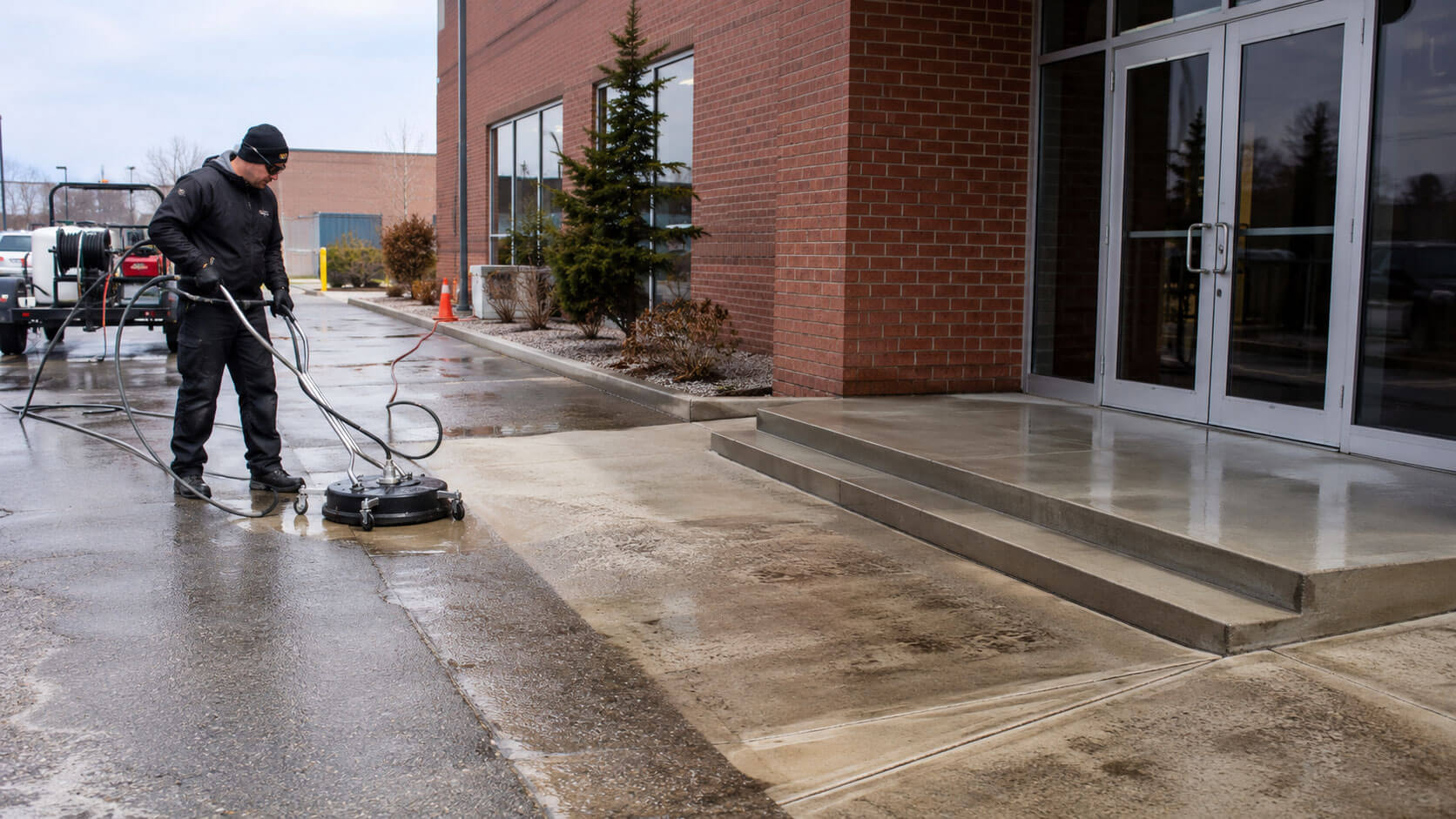
- A surface-cleaning attachment
- Targeted spot treatment
- Degreasing before rinsing
- Manual removal of loose debris
Sound concrete may tolerate pressure washing, but older masonry, siding, stucco, roofing and painted surfaces often need a gentler approach.
Read the equipment instructions and any surface manufacturer recommendations before starting. Inspect hoses, fittings, triggers and nozzles for visible wear. Attach or change nozzles only after the machine has been shut down and pressure has been released.
A small test area should then be cleaned in an inconspicuous location. Allow it to dry before evaluating the result, since wet surfaces can temporarily hide streaks, discolouration and minor damage.
3. Do Prepare and Control the Work Area
Power washing can send water, loosened dirt and small debris beyond the immediate cleaning area. Preparing the site protects people, vehicles and nearby property.
Before beginning:
- Move vehicles, furniture and portable equipment
- Remove loose stones, litter and surface debris
- Close nearby doors and windows
- Identify outlets, lighting, cameras and electrical equipment
- Protect sensitive building components
- Keep pedestrians and pets outside the work zone
- Position hoses to reduce tripping hazards
- Use cones or barriers around commercial work areas
- Confirm where the wash water will travel
Commercial properties require additional planning. Entrances may need to remain accessible, delivery routes may need to be maintained, and sections of a parking area may need to be closed temporarily.
Never assume that other people will recognize the danger. Clearly separate the active work area from tenants, customers, employees and passersby.
4. Do Wear Appropriate Protective Equipment
High-pressure water can move loose material at considerable speed. It can also penetrate the skin and cause a serious injury.
The Canadian Centre for Occupational Health and Safety recommends eye protection, waterproof clothing and boots when working with high-pressure washing equipment. It also warns operators about spray-gun kickback and spraying near electrical sources. See the CCOHS washing and cleaning guidance.
Appropriate protection may include:
- Safety glasses or a face shield
- Waterproof work boots with good traction
- Gloves suitable for the cleaning product
- Long pants and protective outerwear
- Hearing protection when required
- High-visibility clothing on commercial sites
Maintain stable footing and hold the equipment according to the manufacturer’s instructions. Wet pavement, hoses, ramps and accumulated detergent can all create slipping hazards.
A pressure-washing injury may appear smaller than it is. If high-pressure water penetrates the skin, seek urgent medical attention rather than treating it as a minor cut.
5. Do Plan for Wash-Water Collection
Wash water is not necessarily clean just because no detergent was added. Pressure washing can lift oil, paint particles, dirt, salt, sediment and other contaminants from the surface.
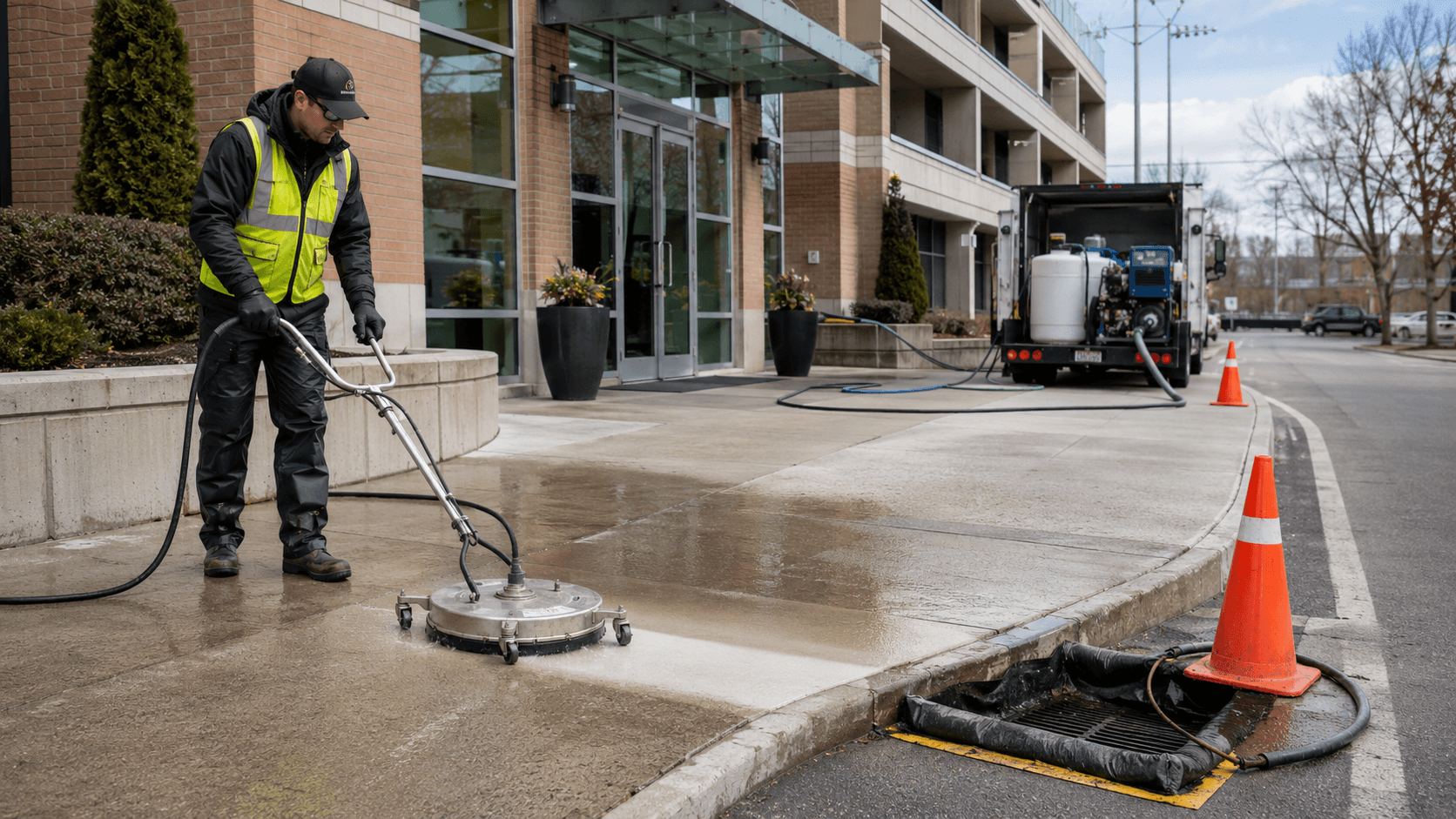
The City of Toronto states that wastewater from outdoor washing must not reach catch basins. This applies to building restoration, graffiti removal and the washing of sidewalks, alleys and other outdoor surfaces. The City also notes that water-only power washing can dislodge contaminants. Review Toronto’s outdoor washing requirements.
Before cleaning begins, determine:
- Where the water will flow
- Whether storm drains are present
- What contaminants are on the surface
- Whether water needs to be contained or recovered
- How collected residue will be handled
- Whether additional site-specific requirements apply
On commercial properties, this planning should happen before hoses and equipment are placed. Trying to control contaminated water after it has started travelling across the pavement is much more difficult.
Five Things You Should Not Do
1. Don’t Rely on a Generic PSI Chart
A list assigning one PSI range to concrete, another to wood and another to siding may look helpful, but it creates a false sense of precision.
Two machines operating at the same stated pressure can clean differently because of variations in:
- Water flow
- Nozzle size and spray angle
- Distance from the surface
- Water temperature
- Cleaning products
- Condition of the equipment
- Speed of the operator’s movement
The age and condition of the material also matter. Newly installed concrete, deteriorated concrete and previously coated concrete should not automatically receive the same treatment.
Begin with the least aggressive suitable method. Increase cleaning strength only after confirming that the surface can tolerate it. If effective cleaning requires enough force to damage the material, pressure washing is not the right solution.
2. Don’t Point the Spray at a Person or Your Body
Never use a pressure washer to clean work boots, gloves, clothing or skin. High-pressure water can penetrate protective clothing and cause a serious injection injury.
The nozzle should also never be directed toward:
- Other workers
- Pedestrians
- Pets
- Occupied vehicles
- Fragile objects
- Unprotected electrical equipment
Engage the trigger only when the nozzle is pointed safely toward the intended work surface. Shut the machine down and release stored pressure before clearing a blockage, disconnecting a hose or changing an attachment.
3. Don’t Use a Pressure Washer From a Ladder
Pressure-washing equipment produces recoil when the trigger is engaged. That force can cause an operator to lose balance, especially on a wet ladder or uneven surface.
A ladder also makes it difficult to manage the hose, maintain a consistent working distance and react safely if an attachment catches or the spray gun moves unexpectedly.
High walls, upper façades, roofs and other elevated surfaces require appropriate access equipment and working-at-heights precautions. In many cases, an extension system, lift or low-pressure cleaning method is more appropriate.
Elevated commercial work should be left to a properly equipped and trained crew.
4. Don’t Spray Directly Into Building Openings or Electrical Components
High-pressure water can enter spaces that ordinary rain would not reach. Keep the spray away from:
- Electrical outlets and panels
- Exterior lighting
- Security cameras
- Door operators and access-control equipment
- HVAC openings
- Dryer and exhaust vents
- Window and door gaps
- Loose siding joints
- Damaged caulking
- Roofing edges and soffit openings
Covering an electrical outlet with a piece of plastic does not make it safe to spray directly. Electrical equipment should be identified and properly protected, and the spray must remain a safe distance away.
Windows should not be treated as another pressure-washing surface. Concentrated spray can damage seals, screens, frames and glass. Use a dedicated window-cleaning method instead.
5. Don’t Mix Cleaning Products or Assume “Green” Means Harmless
Exterior cleaning products should be selected for the contaminant and surface. Combining products in an attempt to make them stronger can create a serious chemical hazard.
Health Canada advises never mixing bleach with another cleaning product. Bleach can react with ammonia-based or acidic products, including vinegar, and release toxic gases. Read Health Canada’s chemical safety warning.
Follow the product label for:
- Dilution
- Application
- Required protective equipment
- Dwell time
- Ventilation
- Rinsing
- Storage and disposal
Terms such as “biodegradable,” “natural” or “eco-friendly” do not mean a product can be allowed to enter a storm drain. They also do not guarantee that concentrated cleaner will be harmless to plants, pets, painted surfaces or people.
Use only compatible products and never create your own chemical mixture.
When Professional Power Washing Is the Safer Choice
A small, ground-level area of sound concrete may be manageable for someone familiar with the equipment. Other projects require more planning, containment or surface knowledge.
Consider professional service when the work involves:
- Commercial or multi-unit properties
- Public entrances or pedestrian areas
- Large parking and loading areas
- Elevated surfaces
- Aging masonry or wood
- Painted or coated finishes
- Oil, grease, rust or graffiti
- Multiple surface materials
- Nearby electrical equipment
- Wash-water recovery
- Uncertain drainage conditions
A professional crew can evaluate the surface, choose the appropriate cleaning process, organize the work zone and manage the water produced during cleaning.
Safer Exterior Cleaning Starts Before the Equipment Is Turned On
Good power washing is not about finding the highest pressure a surface can withstand. It is about removing the unwanted material without damaging the surface, creating a safety hazard or sending contaminated water into the wrong drainage system.
Inspect the property, identify the contaminant, select the appropriate method and plan the work area before cleaning begins. When the project involves delicate materials, commercial activity, height or complicated drainage, professional service is usually the safer option.
Royal Wash provides professional power washing and exterior cleaning for commercial, industrial, multi-unit and residential properties across Toronto and the GTA. Contact our team to discuss the surfaces, staining and site conditions at your property.
Frequently Asked Questions
Is power washing safe for concrete?
Power washing can be suitable for sound concrete when the equipment and technique are appropriate. Deteriorated, cracked, newly installed or coated concrete may require a different approach.
Can outdoor wash water enter a storm drain in Toronto?
The City of Toronto states that wastewater from outdoor surface washing must not reach catch basins. This includes water-only washing because it can carry contaminants removed from the surface.
Is it safe to pressure wash windows?
Direct pressure washing is not recommended for windows. Concentrated water can damage glass, seals, screens, caulking and frames. Windows should be cleaned using equipment intended for that purpose.
What protective equipment should be worn?
Eye protection, waterproof footwear, protective clothing and suitable gloves are basic considerations. Additional protection may be required depending on the equipment, cleaning product and work environment.
Can bleach be mixed with another exterior cleaner?
No. Health Canada advises against mixing bleach with other cleaning products because it can create toxic gases.