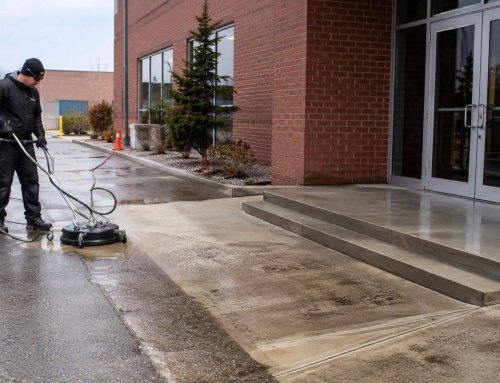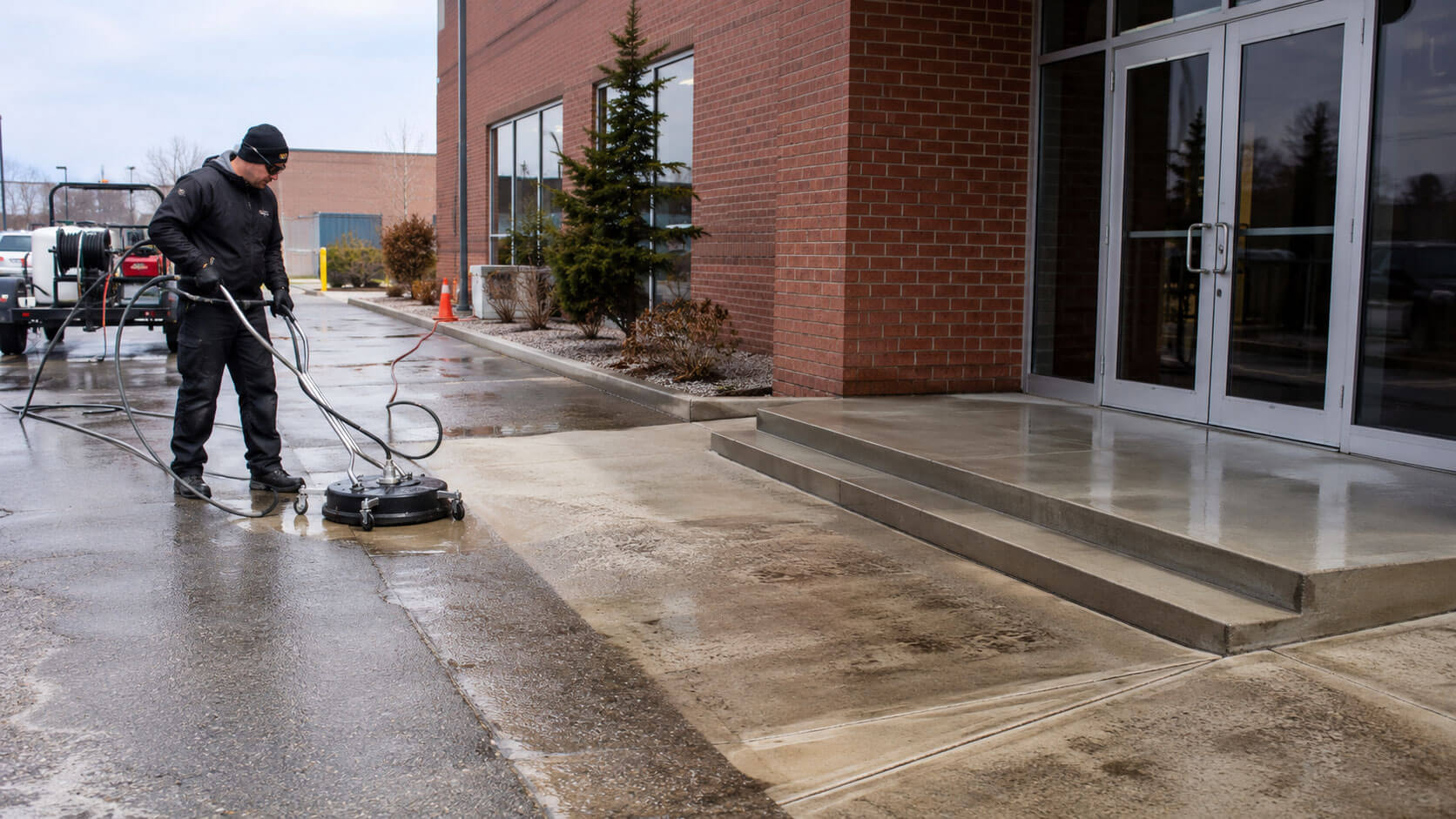
Preparing a commercial property for power washing involves more than moving a few objects out of the way. The cleaning crew needs safe access, building occupants need advance notice, sensitive equipment must be identified, and wash water must be controlled.
Good preparation reduces disruption and helps protect entrances, electrical components, landscaping, parked vehicles and surrounding property. It also gives the contractor an opportunity to identify damaged surfaces and stains that may need a specialized cleaning method.
For property managers in Toronto, preparation should begin with a site review and a clear plan for access, scheduling, pedestrian control and wastewater recovery.
Begin With a Site Walkthrough
A walkthrough allows the property manager and cleaning contractor to confirm the work before equipment arrives.
The review should cover:
- Surfaces included in the cleaning
- Areas that are not part of the project
- Types of stains and buildup
- Existing surface damage
- Building entrances and pedestrian routes
- Delivery and loading schedules
- Water and electrical access
- Catch basins and drainage points
- Nearby vehicles and equipment
- Landscaping and sensitive exterior features
- Expected results and known limitations
A commercial property may contain concrete, brick, stucco, painted metal, glass, awnings and pavement within the same work area. These materials should not all receive the same treatment.
The walkthrough also helps determine whether the project requires pressure washing, heated-water power washing, soft washing or targeted stain treatment.
Agree on the Scope Before Work Begins
The quote or work plan should clearly identify which sections of the property will be cleaned.
For example, “clean the building entrance” could mean several different things:
- The concrete approach
- Entrance stairs and railings
- Exterior walls around the doorway
- Canopies or awnings
- Glass and door frames
- Nearby curbs
- Accessible ramps
- Gum removal
- Oil or rust treatment
Defining the scope prevents uncertainty once the crew arrives. It also helps the property manager determine which entrances, parking spaces or pedestrian areas need to be temporarily closed.
Any heavily stained areas should be discussed in advance. Oil, rust, mineral deposits, paint and deeply absorbed contaminants may not respond to routine pressure washing. Some stains require pre-treatment, while others may only improve rather than disappear completely.
Schedule the Work Around Property Activity
Commercial power washing often needs to be coordinated with tenants, employees, customers and deliveries.
Depending on the property, scheduling considerations may include:
- Business opening and closing times
- Tenant access
- Loading and receiving hours
- Garbage and recycling collection
- Parking restrictions
- Outdoor dining or patio use
- Security and concierge coverage
- Building maintenance schedules
- Noise-sensitive operations
- Other contractors working on the property
Early mornings, evenings or weekends may reduce disruption, but the best time depends on the building and surrounding area.
The schedule should also account for drying time. A surface may remain wet or slippery after the active washing has finished, so the work area should not automatically reopen as soon as the equipment is turned off.
Notify Tenants, Employees and Visitors
People using the property should know which areas will be affected and when the work will take place.
A notice may need to include:
- Date and expected working hours
- Entrances or sidewalks that will be closed
- Alternate pedestrian routes
- Parking spaces that must be cleared
- Delivery restrictions
- Instructions for removing personal property
- Contact information for building management
Notices should be distributed early enough for tenants to make arrangements. Reminder signs can also be placed near the work area shortly before service begins.
If an entrance must remain open, the contractor and property manager should agree on how pedestrians will be separated from hoses, wet pavement and active cleaning equipment.
Clear Vehicles and Movable Objects
Vehicles, furniture and portable equipment should be removed from the cleaning area before the crew arrives.
Items may include:
- Cars and delivery vehicles
- Shopping carts
- Garbage and recycling containers
- Patio tables and chairs
- Portable signs
- Entrance mats
- Planters
- Bicycle racks that are not permanently installed
- Maintenance equipment
- Merchandise displays
- Temporary barriers
Moving these items protects them from spray and gives the crew complete access to the surface underneath.
Vehicles should also be removed from nearby spaces where overspray or loosened debris could reach them. Simply covering a vehicle may not provide adequate protection.
Identify Electrical and Building Equipment
Exterior cleaning often takes place near equipment that should not be exposed to direct water spray.
During the site review, identify:
- Electrical outlets and panels
- EV charging equipment
- Exterior lighting
- Security cameras
- Intercoms and access-control readers
- Automatic door operators
- Fire alarm components
- HVAC intakes and exhaust vents
- Communication equipment
- Signage with electrical connections
- Rooftop or ground-level mechanical equipment
Covering an electrical component with loose plastic does not automatically make it safe to wash around. Some equipment may need to be isolated, de-energized or protected according to its manufacturer’s requirements by an appropriate qualified person.
The cleaning crew should know where sensitive equipment is located and maintain a suitable distance from it.
Close and Check Building Openings
Before washing begins, check that nearby windows, doors and service openings are closed.
Pay particular attention to:
- Loading doors
- Emergency exits
- Windows that tenants can open
- Mechanical-room doors
- Dryer and exhaust vents
- Gaps around utility penetrations
- Loose caulking
- Damaged weatherstripping
- Unsealed wall openings
High-pressure water can enter gaps that ordinary rainfall may not reach. Any known opening or failed seal should be identified before cleaning starts.
If the building envelope is already damaged, that section may need to be excluded until repairs are completed.
Document Existing Surface Damage
Power washing cleans a surface; it does not repair it. Existing deterioration should be recorded before work begins so that everyone understands the starting condition.
Look for:
- Cracked or spalling concrete
- Loose mortar
- Chipped or peeling paint
- Failed coatings
- Rotten or splintered wood
- Loose siding
- Damaged sealants
- Corroded metal
- Broken pavers
- Previous pressure-washing marks
- Water entering through existing defects
Photographs can provide a useful record, especially on larger commercial properties.
The contractor may recommend a test area or a less aggressive method when the surface is aging, coated or previously repaired. Cleaning should be postponed where the work could worsen a known defect.
Identify the Type of Buildup
Different contaminants require different cleaning methods.
Common commercial exterior contaminants include:
| Buildup | Cleaning consideration |
|---|---|
| Winter salt and sand | Loose material may need sweeping or vacuum collection before washing |
| Oil and grease | May require degreaser, dwell time or heated water |
| Gum | Often needs heat or individual spot treatment |
| Algae and organic growth | May require an appropriate treatment and controlled rinsing |
| Rust | Requires a surface-compatible rust treatment |
| Mineral deposits | Pressure alone may not remove the discolouration |
| Paint or graffiti | Requires testing based on the paint and underlying material |
| Unidentified spills | May require assessment before ordinary cleaning begins |
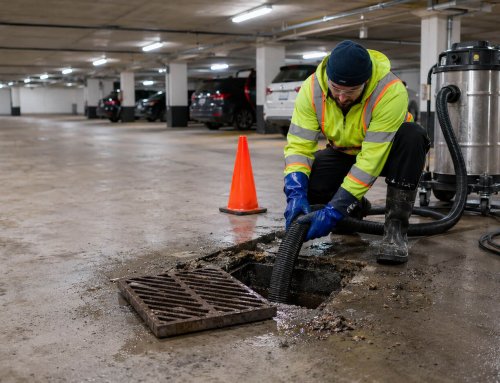
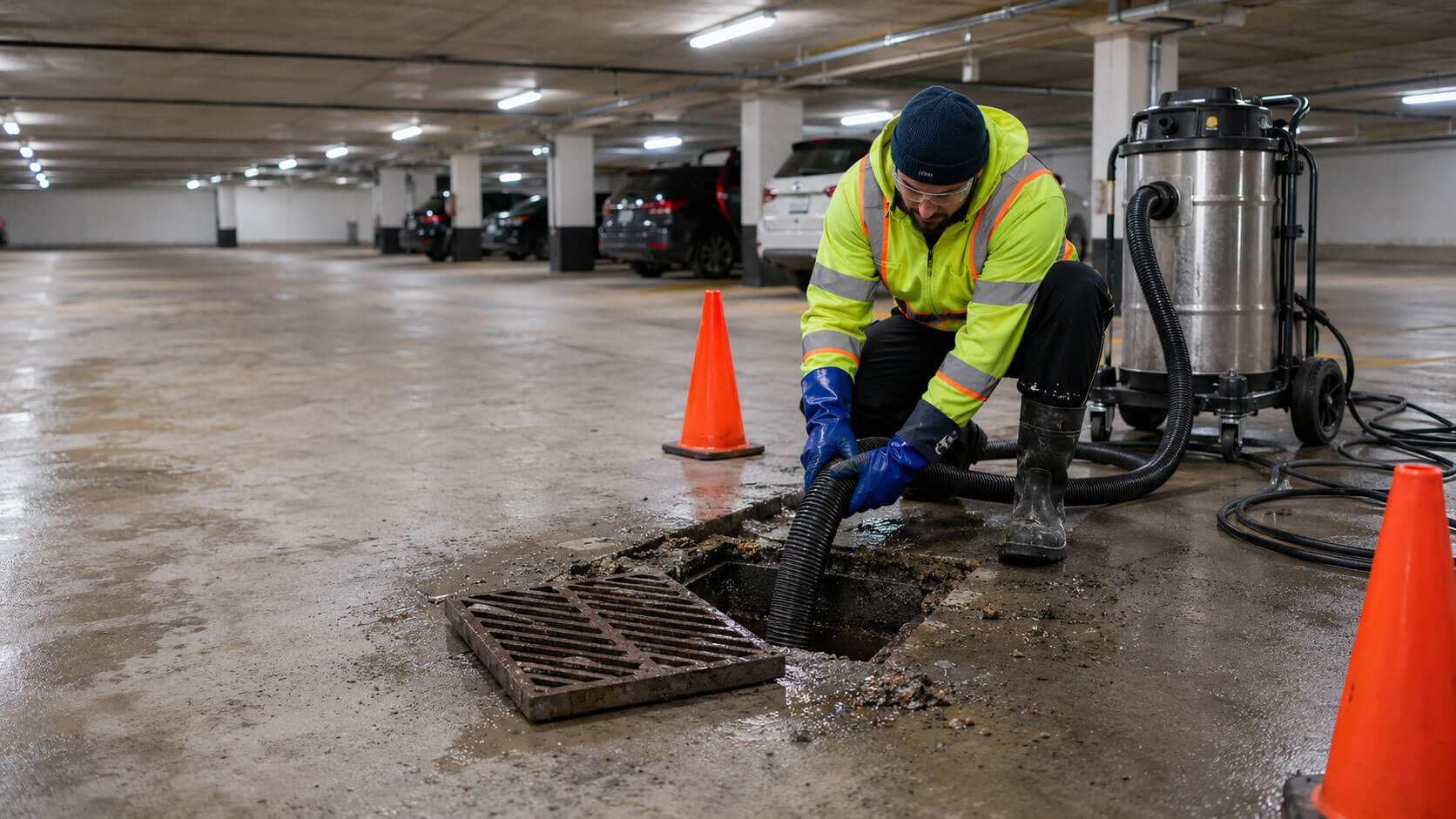
Sweeping or vacuuming heavy loose material first can reduce the amount of sediment carried by the wash water. This is particularly important during underground parking garage cleaning.
Plan Wash-Water Control Before Starting
Wash water contains whatever the cleaning process removes. That can include salt, sediment, oil, paint particles, gum residue and cleaning products.
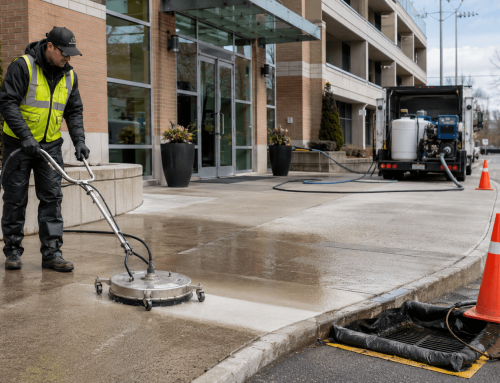
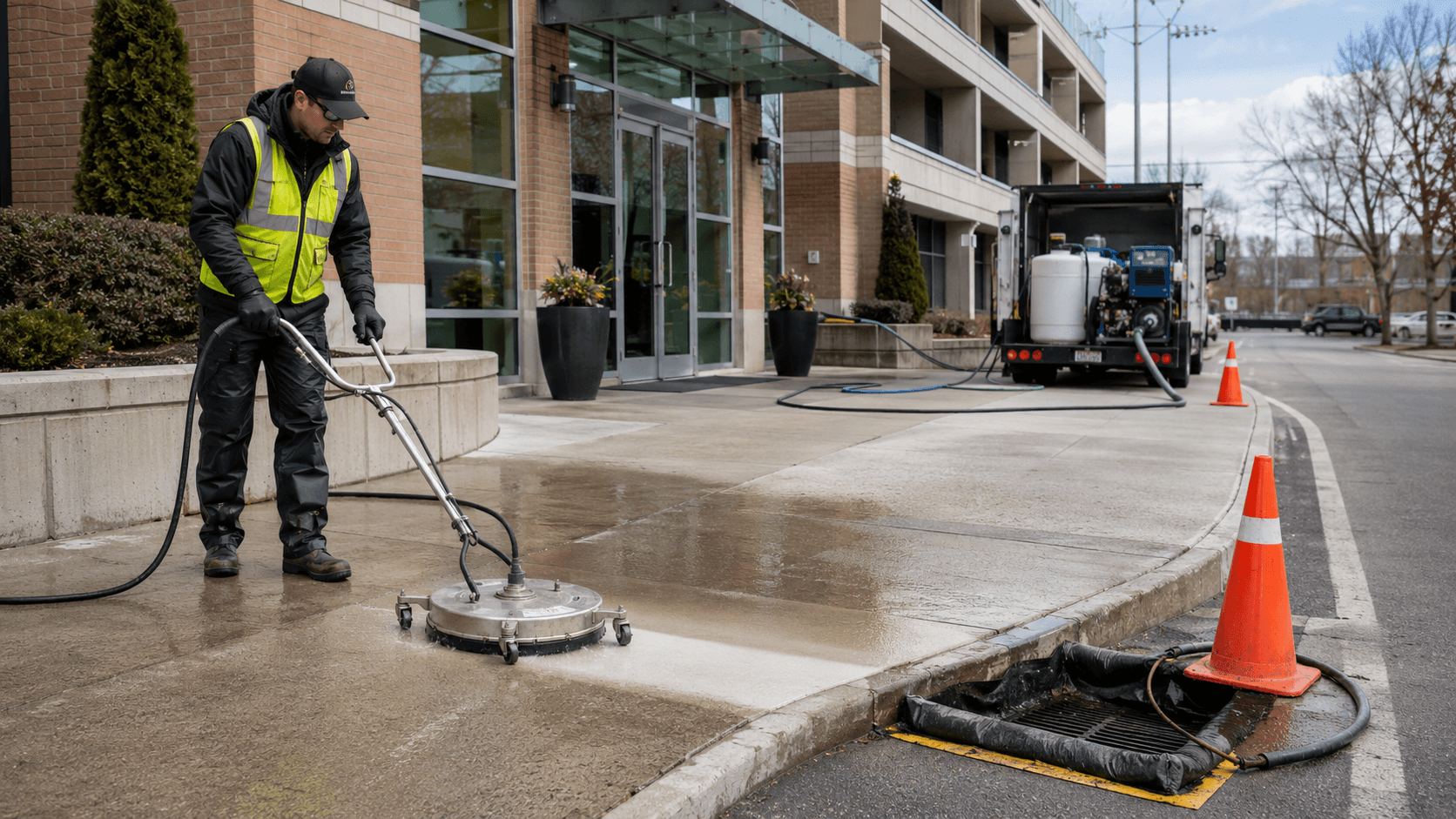
The City of Toronto states that wastewater from outdoor washing must not reach catch basins. Its guidance applies to building restoration, graffiti removal, sidewalks, alleys and other outdoor surface washing. Even washing with water alone can dislodge contaminants. Review Toronto’s outdoor washing requirements.
The preparation plan should identify:
- Catch basins and storm drains
- The natural direction of water flow
- Low areas where water may collect
- The contaminants being removed
- Required containment equipment
- Water-recovery procedures
- Handling of collected solids and residue
Dirty water should not simply be directed toward another part of the property, landscaping or the nearest drain.
On underground sites, the crew should also understand how floor drains, catch basins and oil interceptors relate to the work area.
Protect Landscaping and Exterior Features
Trees, shrubs, garden beds and grass near the cleaning area may require protection. The correct approach depends on the cleaning product, concentration and site conditions.
Preparation may include:
- Moving portable planters
- Identifying sensitive plants
- Following product instructions for pre-wetting or rinsing
- Controlling the direction of spray
- Preventing concentrated solution from pooling
- Keeping hoses out of planted areas
- Protecting decorative exterior features
Plants should not automatically be sealed beneath plastic for an extended period, particularly in warm or sunny conditions. The cleaning contractor should use a protection method appropriate for the product and duration of work.
Establish a Controlled Work Zone
Pressure-washing equipment introduces high-pressure spray, hoses, wet surfaces and moving equipment into areas that may normally be open to the public.
The work zone may require:
- Traffic cones
- Barricades
- Warning signs
- Temporary parking restrictions
- Alternate pedestrian routes
- Hose covers or controlled hose placement
- A spotter near active entrances
- Coordination with security or concierge staff
The Canadian Centre for Occupational Health and Safety warns that high-pressure spray should never be directed toward a person or used near an electrical source. It also identifies equipment kickback and flying debris as potential hazards. See the CCOHS washing and cleaning guidance.
The public should remain outside the active cleaning area until the contractor confirms that it can safely reopen.
Responsibilities Before the Crew Arrives
Preparation works best when responsibilities are clear.
| Property manager or owner | Cleaning contractor | Shared responsibilities |
|---|---|---|
| Notify tenants and employees | Select the cleaning method | Confirm the scope |
| Arrange vehicle removal | Set up equipment and barriers | Agree on scheduling |
| Provide authorized site access | Inspect and test surfaces | Identify sensitive areas |
| Identify building equipment | Protect the active work zone | Review expected results |
| Coordinate deliveries | Manage cleaning products | Plan entrance access |
| Report known damage | Control wash water | Complete the final walkthrough |
The property manager understands how the building operates. The cleaning contractor understands the equipment and cleaning process. Both sides need to exchange information before work starts.
Review the Property After Cleaning
Once the surfaces have dried, the property manager and contractor should review the completed areas.
The walkthrough can confirm:
- Agreed surfaces were cleaned
- Entrances and parking areas can reopen
- Barriers and equipment have been removed
- No standing water remains
- Building components appear undisturbed
- Stains requiring further treatment are documented
- Previously concealed damage is recorded
- Furniture, containers and signs can be returned
Cleaning may reveal cracks, worn coatings, deteriorated joints or faded pavement markings that were difficult to see before. These items can then be added to the property’s maintenance plan.
Prepare for Commercial Power Washing in Toronto
Successful commercial power washing begins before the cleaning equipment is turned on. Clear access, tenant communication, surface inspection and wash-water planning all contribute to a safer and more organized project.
Royal Wash provides professional exterior building cleaning, sidewalk cleaning, parking garage cleaning and other exterior maintenance services across Toronto and the GTA.
Contact Royal Wash to arrange a site assessment and discuss the preparation requirements for your property.
Frequently Asked Questions
Do vehicles need to be moved before commercial power washing?
Yes. Vehicles should be removed from the active work area and nearby spaces where overspray or loosened debris could reach them.
Does the entire building need to close during cleaning?
Not necessarily. The project may be completed in sections or scheduled outside regular operating hours. Safe alternate entrances and pedestrian routes may be required.
Can power-washing water enter a Toronto catch basin?
The City of Toronto states that wastewater from outdoor washing must not reach catch basins. A containment and recovery plan should be established before work begins.
Who moves furniture and other property?
That should be confirmed during scheduling. Property management typically coordinates tenant belongings, vehicles and portable site equipment, while the cleaning crew manages its work-zone setup.
Will power washing remove every exterior stain?
No. Oil, rust, minerals, paint and deeply absorbed stains may require specialized treatment and may not disappear completely.