Beating the Ontario Freeze-Thaw Cycle
Ontario commercial parking lots are exposed to some of the most demanding conditions in Canada. Between heavy snow, road salt, and repeated freeze-thaw cycles, surface deterioration accelerates faster than many property owners anticipate. For property managers, maintenance is about more than just appearance. Rather, it is about protecting a major capital asset, controlling long-term costs, and reducing liability.
The Science of the Freeze-Thaw Cycle
Across Toronto and the GTA, frequent temperature swings around the freezing point create an aggressive cycle of breakdown. Specifically, the process follows a destructive pattern:
-
Infiltration: Water enters small cracks in the pavement.
-
Expansion: When water turns to ice, it expands by roughly 9%.
-
Hydrostatic Pressure: This expansion creates internal pressure that lifts and separates pavement layers.
-
The Result: As temperatures rise, the ice melts and leaves behind a larger void.
Because this cycle repeats throughout the winter, it leads to cracking, surface fatigue, and pothole formation. Consequently, deterioration accelerates quickly without immediate intervention.
The Corrosive Effect of Winter Salt and Debris
While road salt is necessary for safety, it has long-term negative effects on pavement. Specifically, salt draws moisture deeper into asphalt and concrete surfaces. When you combine salt with dirt and oil, it creates a layer that traps moisture against the pavement.
This combination leads to:
-
Accelerated surface breakdown.
-
Weakening of asphalt binders.
-
Increased cracking and scaling.
-
Ongoing deterioration even after winter ends.
If you do not remove this residue early in the season, it will continue to impact the surface well into the spring. Therefore, early cleaning is a vital protective step.
Financial Strategy: CapEx vs. OpEx
For commercial property owners, parking lot maintenance is a critical financial decision. In fact, proactive maintenance (operating expense) is significantly more predictable than reactive repair (capital expenditure).
Consider the difference in scale:
-
Small Issue: A hairline crack that requires basic cleaning and sealing.
-
Major Expense: Structural failure requiring full resurfacing.
By investing in consistent spring maintenance, you can extend the usable life of a parking lot by several years. Consequently, this reduces the frequency of large-scale capital projects and stabilizes your long-term budget.
Power Washing as a Diagnostic Tool
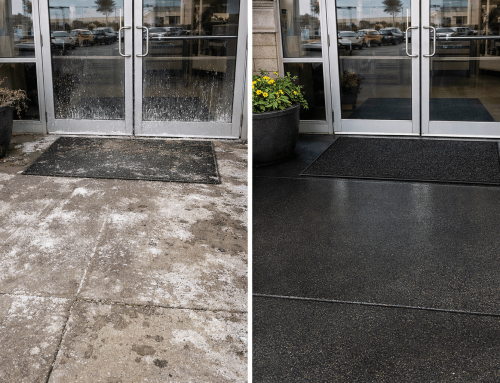
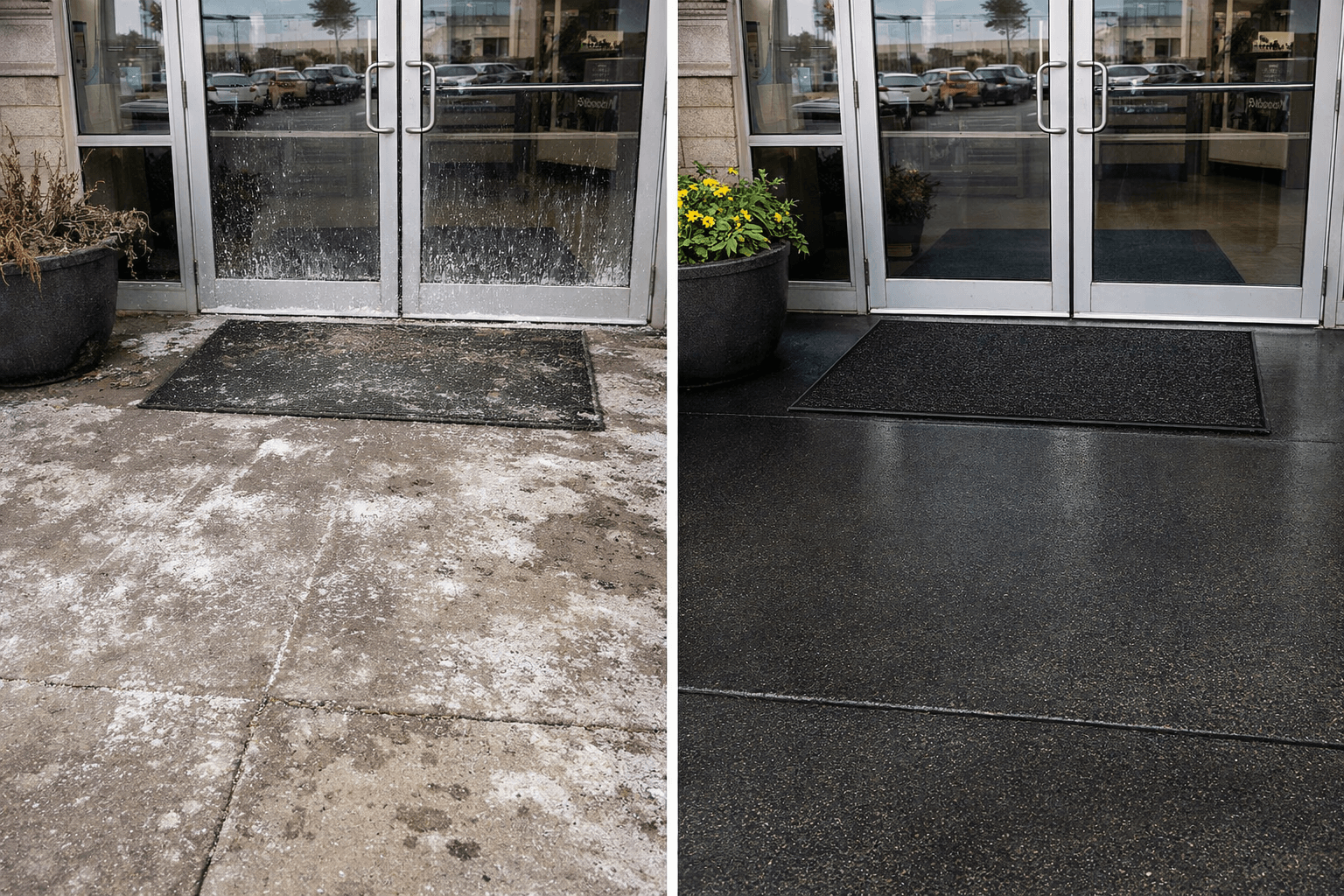
Professional power washing does more than improve appearance—it reveals underlying issues. After winter, layers of salt and sand often hide surface problems. However, cleaning acts as a “reset” for the property.
Specifically, a clean surface makes it easier to identify:
-
Hairline cracks that need sealing.
-
Drainage issues and pooling water.
-
Surface inconsistencies.
-
Faded AODA-compliant markings.
In addition, cleaning clears expansion joints and improves drainage performance. Thus, this step supports both maintenance planning and regulatory compliance.
Timing Your Maintenance: The Spring Window
In Ontario, early spring represents the most important maintenance window. Once the snow melts and temperatures stabilize, you must remove winter residue to prevent further corrosion.
Typical timing occurs from late March to early May. During this window, property managers can assess winter damage and schedule repairs before seasonal traffic increases. Conversely, delaying this step allows salt and moisture to continue degrading the surface throughout the summer.
Liability and the Occupiers’ Liability Act
Parking lot conditions are more than a maintenance concern—they are a legal liability factor. Under the **Occupiers’ Liability Act (Ontario)**¹, property owners must take reasonable steps to ensure that premises are safe.
Common surface issues that increase risk include:
-
Potholes and uneven surfaces.
-
Debris buildup that causes slips.
-
Poor visibility of safety markings.
Because these issues can lead to injury, a documented maintenance approach is essential. Starting with seasonal cleaning helps reduce your legal exposure and demonstrates due diligence.
Is Your Lot Ready for a Post-Winter Reset?
A winter’s worth of salt and moisture can significantly shorten the life of your parking lot. However, a structured maintenance approach supports long-term performance and safety. Royal Wash works with commercial properties across Ontario to maintain parking lots and support maintenance planning.
Call us today to schedule your spring assessment.
Regulatory Reference
¹ Occupiers’ Liability Act, R.S.O. 1990, c. O.2.