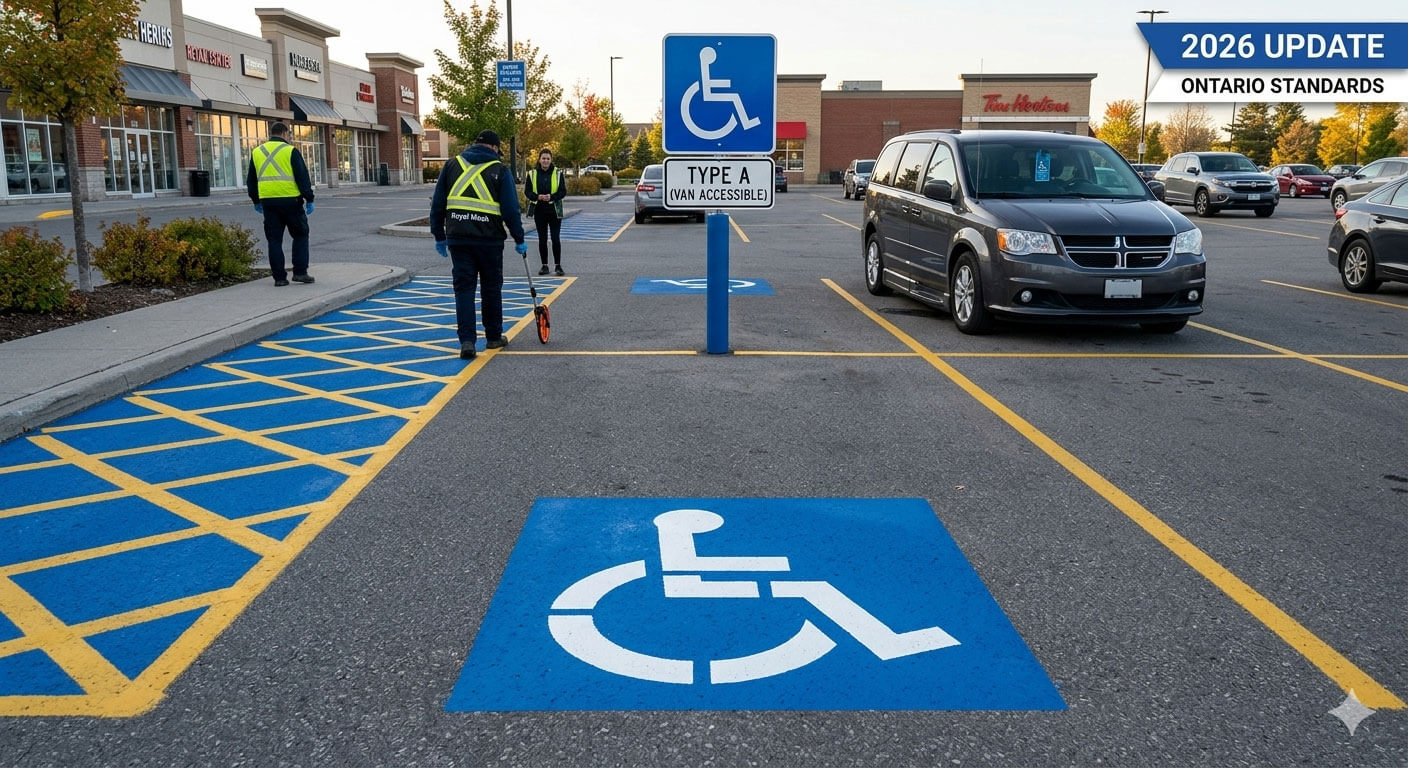
Fire routes are one of the most overlooked safety and compliance features on commercial properties. However, faded pavement markings, blocked access lanes, or improperly maintained fire routes can create serious risks during emergencies.
For commercial property owners and managers across Ontario, properly marked fire routes help support emergency access, improve traffic flow, and reduce compliance concerns related to municipal fire and parking by-laws.
Fire route maintenance is not simply about repainting lines. It is part of maintaining a safer and properly managed commercial property.
What Is a Fire Route?
A fire route is a designated access lane that allows emergency vehicles to reach buildings quickly and safely.
These routes are commonly found at:
- Commercial plazas
- Condominiums
- Office buildings
- Schools and institutional properties
- Industrial and warehouse facilities
- Multi-unit residential developments
Fire routes must remain clearly visible and unobstructed to support emergency response access.
Why Fire Route Markings Matter
During emergencies, seconds matter.
Clearly visible fire route markings help:
- Prevent unauthorized parking
- Maintain emergency access
- Improve traffic organization
- Reduce confusion for visitors and delivery vehicles
- Support safer site navigation
Over time, however, pavement markings fade due to:
- Snow plow wear
- Road salt exposure
- UV damage
- Vehicle traffic
- Freeze-thaw cycles
Without regular maintenance, markings become difficult to see, especially during rain, snow, or nighttime conditions.
Ontario Municipal Requirements and By-Laws
Fire route requirements vary by municipality across Ontario. In many cities, fire routes require both:
- Clearly marked pavement lines
- Posted signage approved by local fire departments or municipalities
Municipal parking enforcement and fire services may issue:
- Compliance orders
- Parking enforcement penalties
- Property standards concerns
for improperly maintained fire routes.
Because local requirements differ, property owners should confirm the standards that apply within their municipality.
Common Fire Route Problems on Commercial Properties
Commercial properties often develop compliance issues gradually over time.
Faded Pavement Markings
Red curb markings and painted lettering become difficult to see after repeated winter exposure.
Improper Parking
If markings lose visibility, drivers are more likely to block emergency access lanes.
Surface Deterioration
Cracked asphalt and deteriorated pavement reduce line clarity and overall visibility.
Seasonal Wear
Ontario winters accelerate fading due to:
- Snow removal equipment
- Salt exposure
- Moisture penetration
- Ice abrasion
As a result, many commercial sites require periodic re-striping to maintain visibility.
Why Visibility Matters During Emergencies
Emergency response depends on clear site access.
Blocked or poorly marked fire routes may:
- Delay emergency vehicle positioning
- Restrict access near entrances
- Create congestion during emergencies
- Increase operational risk for large properties
For busy commercial properties, maintaining visible fire routes supports both safety and property organization.
Fire Route Maintenance and Property Management
For property managers, fire route maintenance should be part of a broader parking lot and site maintenance strategy.
This often includes:
- Line painting inspections
- Surface cleaning
- Crack repair coordination
- Signage visibility checks
- Seasonal maintenance planning
At the same time, routine pressure washing helps improve the visibility of painted markings by removing dirt, salt residue, and surface buildup.
When Should Fire Routes Be Repainted?
There is no universal repainting schedule because wear varies based on:
- Traffic volume
- Winter severity
- Snow removal frequency
- Surface condition
- Exposure to sunlight
However, many Ontario commercial properties inspect fire routes annually, especially after winter.
Spring and early summer are often the best times for:
- Parking lot inspections
- Re-striping
- Surface cleaning
- Compliance reviews
This timing allows property managers to address winter damage before peak summer traffic.
Supporting Safer Commercial Properties
Clearly marked fire routes help commercial properties operate more safely and efficiently.
They also help:
- Improve emergency accessibility
- Support municipal compliance
- Reduce parking confusion
- Reinforce professional property standards
For larger commercial properties, visible markings contribute to a more organized and better-maintained environment overall.
Finally
Fire route markings are a critical part of commercial property safety infrastructure. Over time, Ontario weather, traffic, and winter conditions reduce the visibility of pavement markings and signage.
Regular inspections, cleaning, and re-striping help maintain safer access routes while supporting property compliance and professional site appearance.
Royal Wash provides commercial line painting and exterior maintenance services across Ontario, helping property managers maintain clear and visible fire route markings throughout the year.
👉 Request a Commercial Parking Lot Assessment
Footnotes
¹ Fire route requirements and enforcement standards vary by municipality across Ontario and may include specific pavement marking, signage, and access requirements approved by local fire departments.