Why Restaurants in Ontario Need Exterior Grease Containment Cleaning
Grease doesn’t stay in the kitchen.
In reality, for restaurants across Ontario, fats, oils, and grease (FOG) routinely make their way outside—to dumpster pads, loading areas, rear walkways, and even building façades. Over time, this buildup becomes more than just a cleanliness issue. Instead, it creates safety hazards, attracts pests, and increases the risk of health code violations.
For that reason, exterior grease cleaning is not optional maintenance—it is part of running a compliant and safe operation.
Where Exterior Grease Buildup Comes From
Even well-managed kitchens produce grease that escapes beyond interior systems. In most cases, the buildup comes from a few consistent sources:
- Dumpster areas: Leaking bags and containers release grease onto concrete pads
- Grease trap overflows: When maintenance slips, FOG spreads into surrounding surfaces
- Loading zones: Food transport and waste handling leave behind residue
- Exhaust systems: Rooftop and wall-mounted vents discharge grease particles that settle nearby
As a result, these areas develop a sticky, embedded layer that standard cleaning methods cannot remove.
The Real Risk: Slips, Falls, and Liability
Grease is one of the most dangerous surface contaminants on a commercial property. In particular, it affects safety in ways that are often underestimated:
- Creates low-friction walking surfaces, especially when wet
- Increases the risk of employee and delivery driver injuries
- Leads to potential insurance claims and legal exposure
Because of this, under the *Occupiers’ Liability Act (Ontario)*¹, restaurant owners and property managers must take reasonable steps to ensure safety.
So, a greasy dumpster pad or service corridor is not just dirty—it is a liability.
Health Code and By-Law Considerations
Beyond safety, exterior grease buildup can lead to regulatory issues.
Across Ontario municipalities:
- Public health inspectors may cite unsanitary exterior conditions
- Sewer use by-laws restrict the discharge of fats, oils, and grease into drainage systems
- **Ontario Building Code (O. Reg. 332/12)**² requires grease interceptors in food service operations
If ignored, this can result in:
- Fines
- Required corrective action
- Temporary closure in severe cases
Why Grease Cannot Be Removed with Basic Cleaning
Grease bonds to surfaces. More importantly, it doesn’t sit on top—it works its way in:
- It penetrates porous concrete
- It traps dirt, bacteria, and organic waste
- It becomes harder to remove over time
For example, sweeping or rinsing only addresses surface debris. However, without proper pressure, heat, and degreasing agents, grease remains embedded and continues to build.
High-Risk Areas That Require Regular Cleaning
Restaurant operators should focus on specific exterior zones. Typically, these are the areas where buildup is most severe:
- Dumpster Pads
Highest concentration of grease and organic waste
Frequent source of odor and pest activity - Rear Walkways & Service Corridors
Heavy foot traffic from staff and deliveries
Increased slip risk - Loading & Delivery Areas
Grease transfer from food handling and transport - Exterior Walls & Surrounding Surfaces
Grease fallout from exhaust systems
Visible staining and long-term material damage
Taken together, these areas represent the highest operational risk.
The Role of Professional Grease Cleaning
Commercial pressure washing is the most effective way to manage exterior grease. That said, it needs to be done properly.
A complete process includes:
- Degreasing treatment: Breaks down oil-based contaminants
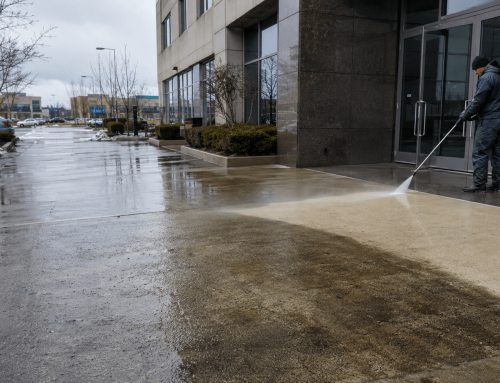
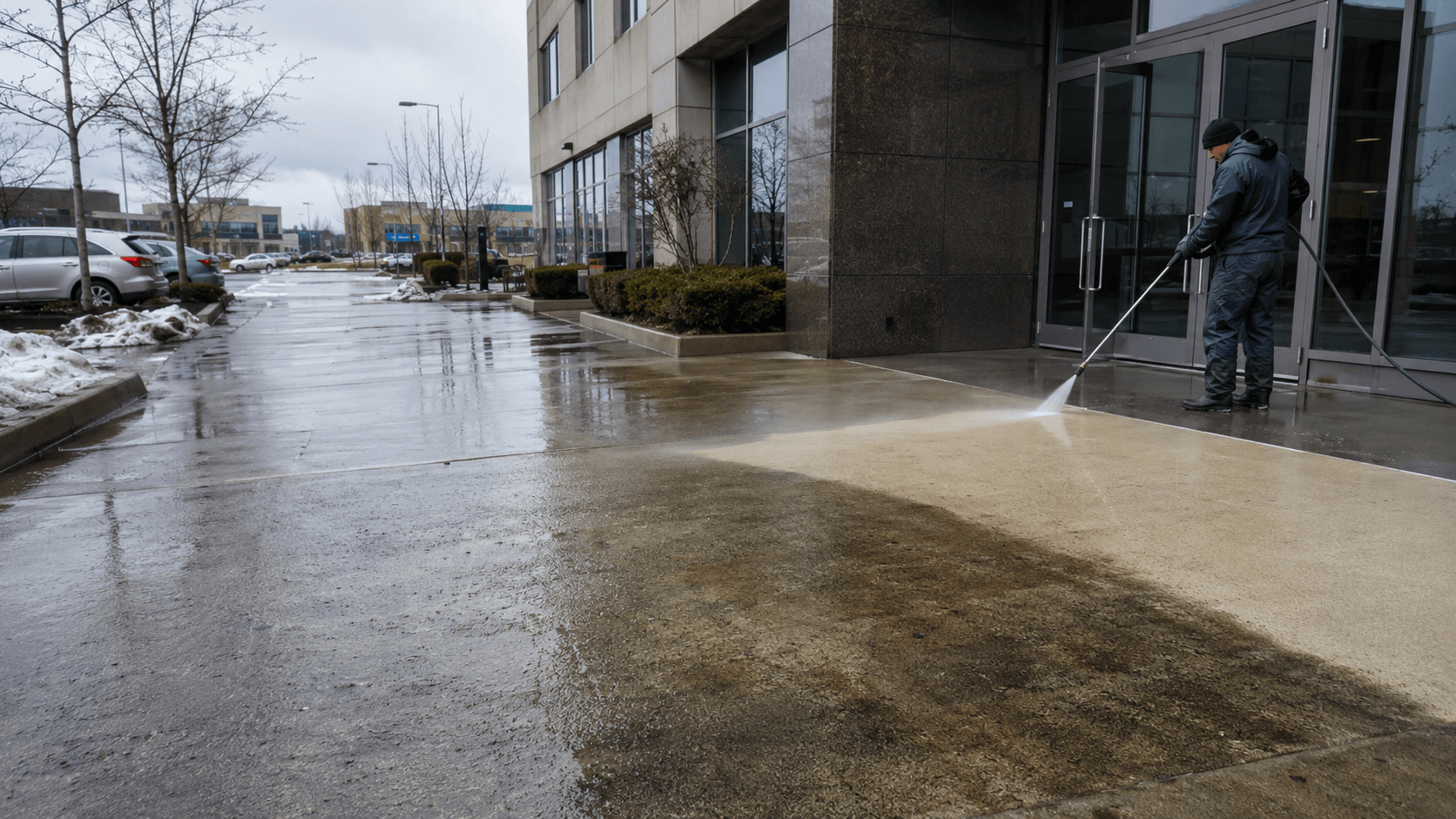
- Hot water pressure washing: Removes embedded grease
- Surface restoration: Improves traction and reduces slip risk
- Containment practices: Prevents runoff from entering storm drains
In other words, this is not basic cleaning—it requires the right approach for food-service environments.
Protecting Your Business and Reputation
Exterior cleanliness directly affects how your business is perceived. In many cases, it’s one of the first things people notice:
- Clean service areas reflect professional operations
- Dirty grease zones signal neglect
- Odors and pests impact customer experience and neighboring tenants
Especially in competitive markets across Ontario, these details carry weight.
How Often Should Grease Areas Be Cleaned?
Frequency depends on the type and volume of operation. Generally speaking, the guidelines are:
- High-volume restaurants: Monthly or bi-monthly cleaning
- Moderate traffic locations: Quarterly cleaning
- Shared commercial properties: Coordinated maintenance schedules
By staying consistent, you prevent buildup from reaching a costly stage.
Stay Ahead of Problems Before They Start
Grease buildup does not fix itself. Instead, it spreads, hardens, and creates increasing risk over time.
Royal Wash provides commercial exterior grease cleaning for restaurants and food service properties across Ontario, helping operators maintain safe, compliant, and professional environments.
To stay ahead of issues, request a Cleaning Assessment.